
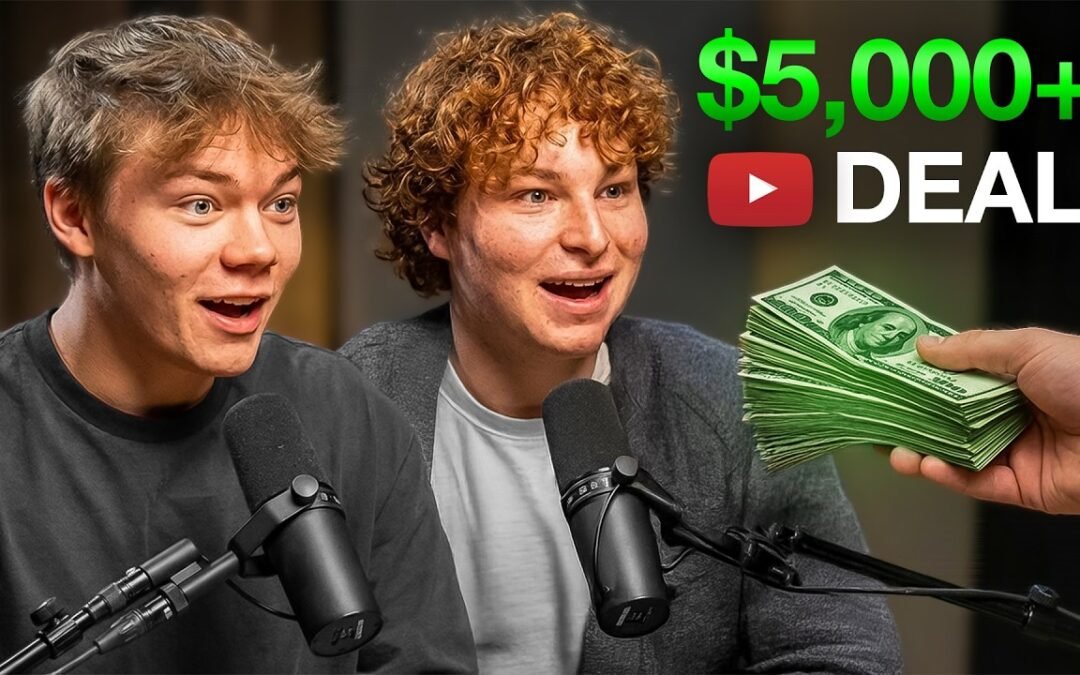
Figuring out how much to charge for YouTube brand deal isn’t easy. If you ask for too much, you may miss out but if you ask for too little, you’re falling into the classic trap and leaving money on the table.
Josh Krueger and Jack Gordon (who have 1.5M subscribers between them) seem to have it figured out. So we say down with them as part of the Creator Money series to ask the tough questions and get insight every YouTube creator can use to price their brand deals and sponsorships.
What Josh and Jack shared isn’t a formula for pricing YouTube brand deals, but it’s important insight for any creator looking to navigate sponsorships. It all comes down to this: what you can charge for a YouTube brand deal is driven by how valuable your audience is to the specific brand and what that brand is trying to achieve (awareness, subscriptions, conversions, or something else).
Basically, how much can you help, and what is that help worth to the brand… oh, and there’s no harm in asking for a bonus on performance, as Jack explains.
Below is a practical way to how to price youtube brand deals using the real-world lessons Josh Krueger and Jack Gordon share—plus how niche, negotiation, and format (short vs long) change youtube brand deal rates dramatically.

Get an unfair advantage on YouTube
Give your YouTube channel the upper hand and easily optimize for more views, more subs, and more of every metric that matters.
Get Started

Start with a baseline number and raise it when your content earns attention
The first step isn’t to figure out “perfect” pricing for a brand deal. it’s getting a first deal done with a number you feel good about.
Josh describes charging a baseline amount for his first brand deal and then using performance as a signal to adjust upward. When one video from that early deal showed outsized performance (a banger, in other words), he was justified in asking for more.
Here’s the basic formula:
- Pick a starting figure for your first deal.
- Track results (views, but also engagement and conversions where possible).
- Increase your ask on the next one if the work over-delivered.
YouTube brand deals are just one way smart creators monetize; check out our post on how to make money on YouTube as a small creator to build out your YouTube monetization foundation.

If your video performs, ask for a bonus
The best YouTube brand deals are mutually beneficial. They’re not purely transactional. They’re also about relationship-building. Brands can’t expect you to be predict performance with total accuracy. So if a brand sponsored video shows outsized performance, why not ask for a bonus?
That’s exactly what Jack did.
How to think about this:
- If your video hits unusually high results, you can treat the bonus request as “closing the loop.”
- Worst case: the answer is no.
- Best case: you turn one successful collaboration into better cash next time.
Bonus requests are easiest when you’ve been clear about expectations in the agreement and you can point to concrete outcomes (views, click-through, sales, or other brand-defined metrics).
Audience niche beats view count
Too many creators fall into the trap of comparing themselves on total views.
Jack’s argument is that the market doesn’t pay you based on “views” but on the attention you can deliver to a brand that wants to reach a specific audience.]
Your audience.
That’s why YouTube ad rates vary widely by niche. A channel with fewer views in an in-demand niche can out-earn a channel with more views in a less desirable niche. In other words, it’s not about views so much as it is about the audience behind those views.
Example from the discussion:
- A finance channel getting 10,000 views from people with high savings can be extremely valuable to luxury or high-ticket brands.
- A general “entertainment” channel might get 100,000 views but offer weaker alignment for that same luxury brand.
So YouTube brand deal rates, reframe the question:
- How many people saw it?
- More importantly: who were those people and what does that audience enable the brand to sell?
If you want to improve the part you control (getting the right viewers in the first place), TubeBuddy’s content on YouTube analytics: how to use it and YouTube keyword research can help you align your uploads with the audiences brands pay for.
How to price YouTube brand deals: supply and demand
Instead of thinking “What is my rate card?” think “How in demand is my audience-to-brand match?”
Jack frames it as supply and demand:
- Your “product” isn’t your followers, it’s their attention.
- Your attention value depends on niche alignment and how effectively connect your audience and a brand.
- Brands have different needs: some want awareness, others want conversions. YouTube brand deals need to be priced accordingly.

There’s no universal YouTube brand deal rate card
One mistake many creators is thinking about pricing in fixed terms. That can sound like “I charge $X for every short” or “I charge $X for a 60-second integration.”
But in reality, how much to charge for YouTube brand deal is not a static number. It fluctuates based on factors like:
- Time of year (budgets change)
- Your audience size and momentum
- How engaged and targeted your audience is
- What the brand needs right now
- Whether the brand wants awareness, trials, subscriptions, or purchases
That’s why blanket comparisons (“creator A gets 100K views, so I should get paid the same”) often fall apart. Even at equal view counts, two channels can deliver totally different business outcomes.
If you’re looking for more monetization frameworks, explore TubeBuddy’s channels make the most money or monetization strategy content.
Negotiation tip: ask them to throw out a number (and counter)
There’s an old rule in negotiations: whoever speaks first loses.
In practice, this means whoever says a number first loses the upper hand. As a creator, sharing your number first means you can anchor yourself too low… or too high. Neither is an outcome you want. Instead, Jack suggests:
- Ask the brand what they’re thinking (try to get them to throw out a number first).
- Consider this a range on which to base a reasonable counter.
- Counter respectfully with something like their number plus ~20% based on your confidence, track record, and deliverables.
This approach helps you learn what the market, the brand, and the category are willing to pay and builds a cleaner pricing conversation.
Short form vs long form: awareness vs conversion

This is one of the biggest reasons creator income differs across video formats.
Jack explains a general pattern:
- Long-form brand deals will tend to target conversion metrics; building long-term trust, persuasion, turning viewers into buyers.
- Short-form brand deals tend to target awareness metrics; exposure, virality, getting lots of eyes on the product or brand in a short time.
In other words, if a brand is looking for conversions, you need viewers to take action. If a brand is looking for awareness, you need as many viewers as possible. This will impact the type of video you create and the format you use.
A practical way to plan your quote:
- Ask the brand: “What do you consider success for this campaign?”
- Price your deliverable based on the business job you’re helping them do.
- If their success metric is conversions, be ready to show how you’ll support that outcome (script, CTA alignment, and audience fit).
Jack outlines how different deal formats change what brands mean by “success,” which in turn impacts what you can charge.
One more thing: protect trust by matching brand goals to your content style
Pricing gets easier when you’re honest about what you can deliver. If you “sell” a brand’s product to an audience you don’t actually have, both the campaign and the relationship suffer.
Instead, keep a clear alignment between:
- Your audience
- Your niche positioning
- The campaign’s success metric
- Your deliverable format (short vs long)
For a creator-focused read about making brand partnerships more effective (and more transparent), see YouTube’s official guidance on disclosure and monetization policies.
Conclusion: build your pricing logic, then let results compound
If you want to get confident about how much to charge for YouTube brand deal, stop chasing a mythic rate card. Use a repeatable approach:
- Start with a baseline number, then raise it when your sponsored content over-delivers.
- Ask for bonuses when performance is exceptional.
- Price by audience value and niche fit—not only view count.
- Negotiate by learning the brand’s budget (ask them to throw out a number).
- Differentiate short vs long form based on what “success” means to the brand.
When you can clearly explain who your audience is, what outcomes you drive, and why your format fits their needs, YouTube brand deal rates stop feeling random.
Want a helpful next step? Read YouTube sponsored content: how to disclose, then tighten your sponsor-facing positioning using your analytics and audience insights.
Get an unfair advantage on YouTube
Give your YouTube channel the upper hand and easily optimize for more views, more subs, and more of every metric that matters.
Get Started
FAQ: How much to charge for YouTube brand deals
Start with a baseline number you can confidently deliver on, then adjust based on performance. Don’t anchor your pricing only to view count. Use niche alignment and what the brand is trying to achieve (awareness vs conversions) to guide how to price YouTube brand deals.
Wildly. YouTube sponsorship rates by niche vary greatly because brands pay for targeted attention. A smaller finance or tech audience can be worth more than a larger general audience if the viewers match the buyer profile.
No. Especially not if you’re in different niches. Use other creator’s rates as inspiration but not the benchmark.
No. There’s typically no universal, permanent rate card. Pricing can fluctuate based on seasonality, audience size, and what the specific brand needs right now.