
tl;dr – YouTube age estimation model for creators
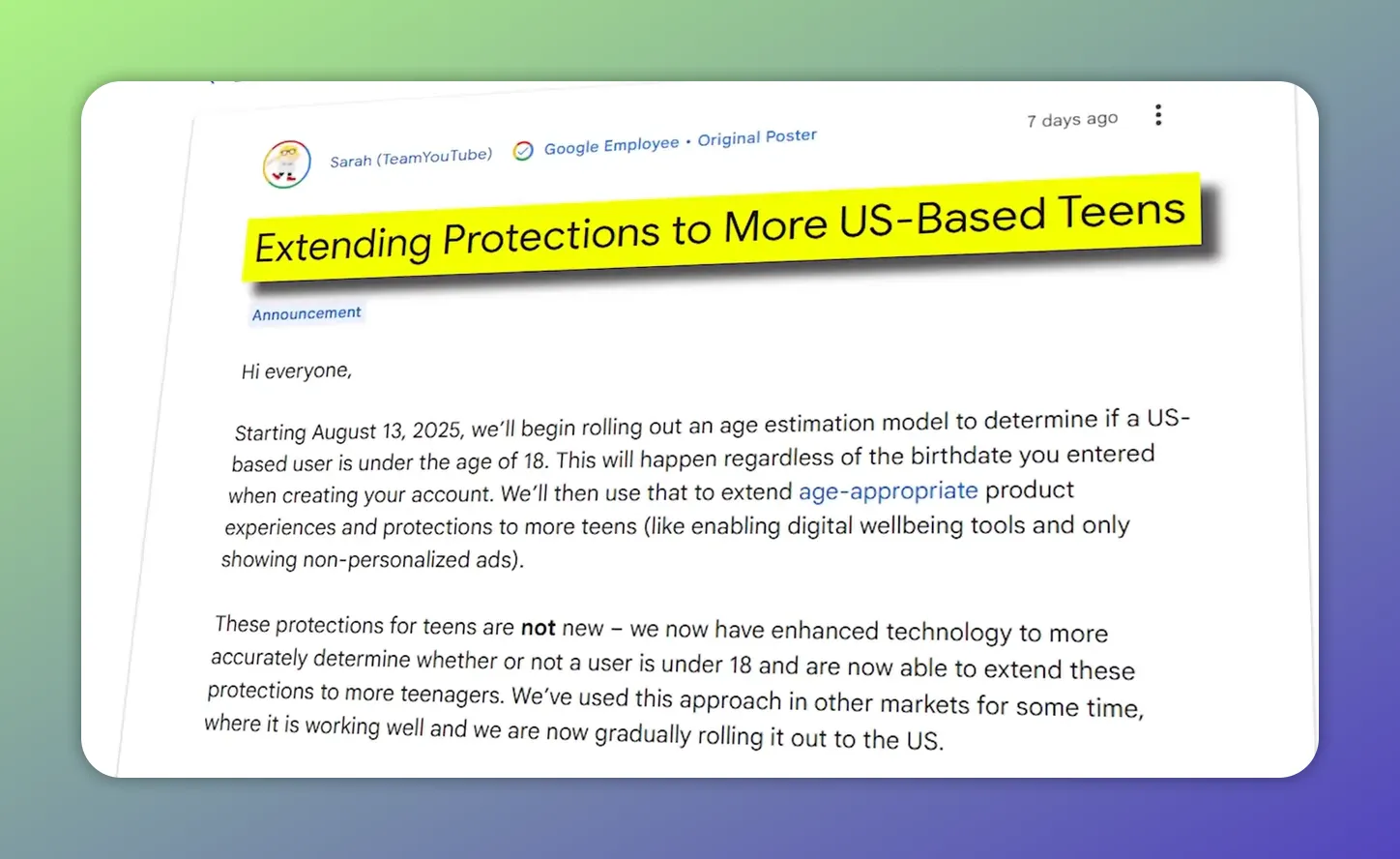
- YouTube now uses an age estimation model in the U.S. to identify whether accounts belong to users under 18.
- The system looks beyond entered birthdates and uses account activity and history to estimate whether an account belongs to someone under 18.
- If an account is flagged as under 18, teen protections will apply automatically unless the account holder is over 18 and verifies their age.
- Protections for under-18 users include non-personalized ads, digital wellbeing reminders, privacy prompts, and reduced recommendation frequency for some repeatedly consumable sensitive content.
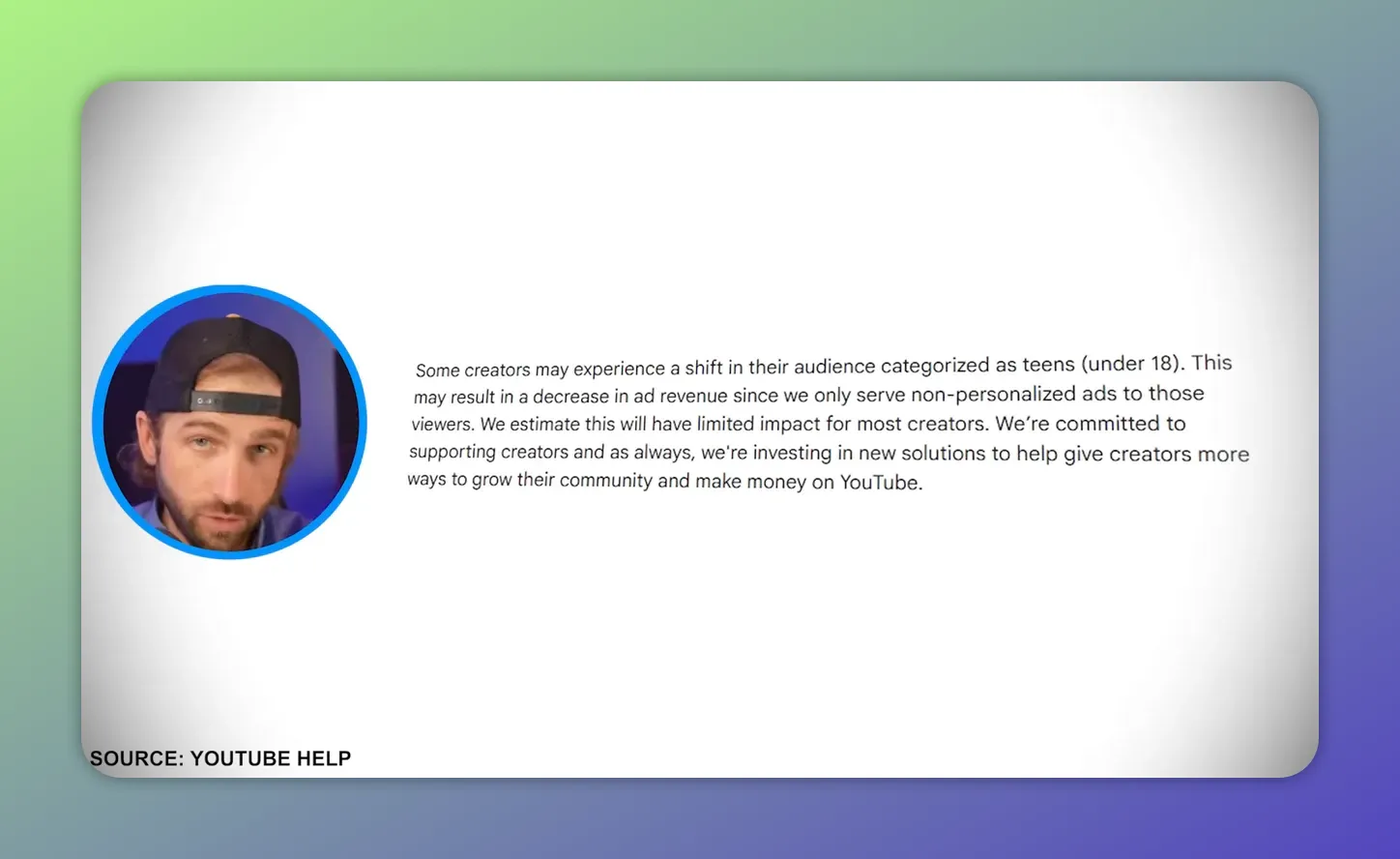
- For creators, more audience members may be classified as under 18, which can lower ad revenue because personalized ads will not be served to those accounts.
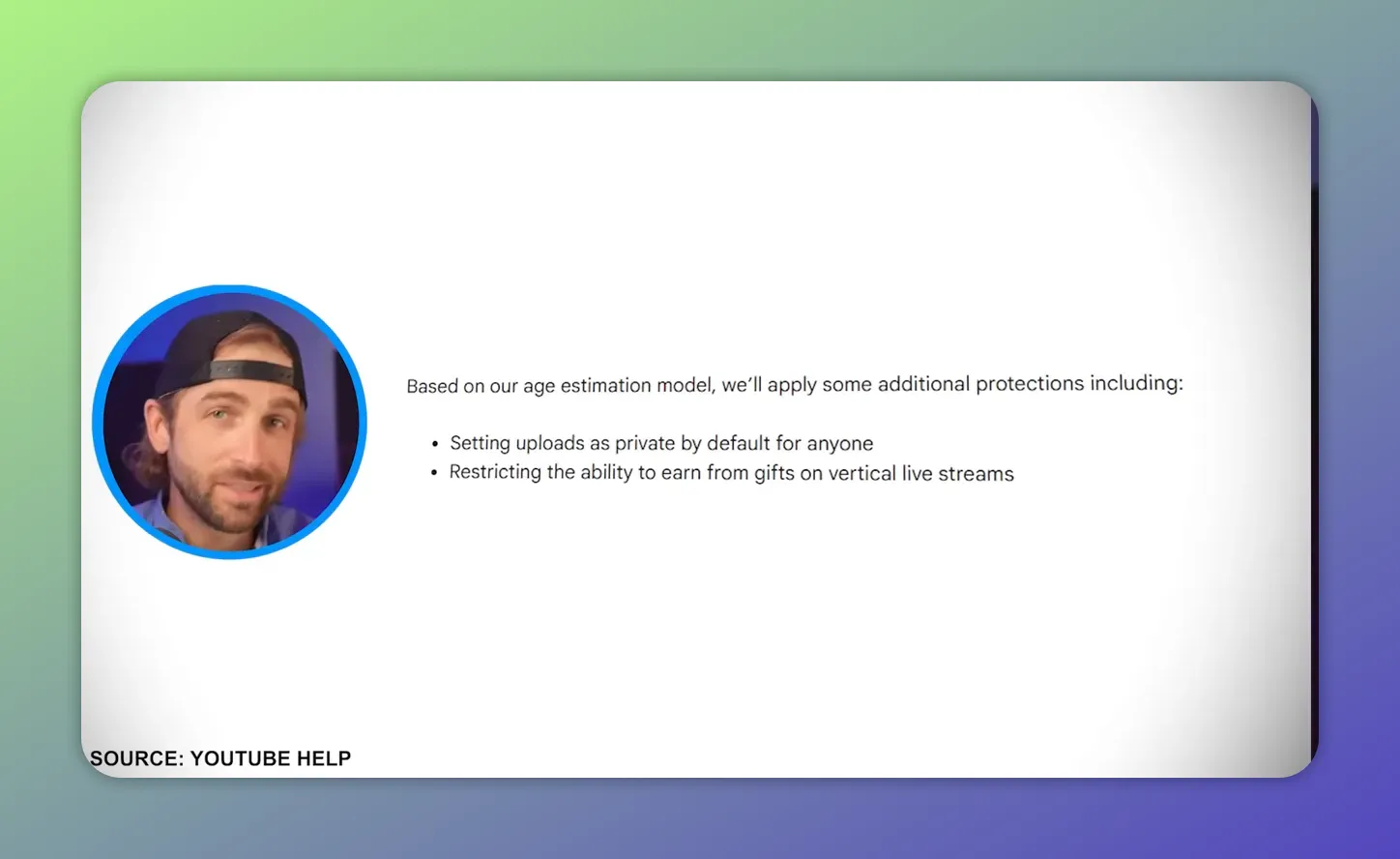
- Accounts believed to belong to teens will also face some creation-side restrictions, including uploads defaulting to private and no gifts on vertical live streams.
- Channels in gaming, challenge, prank, and other teen-skewing categories may feel the impact more than most.
- The smartest response is to review your audience mix, check flagged content, and strengthen revenue streams beyond ads.
The YouTube age estimation model is something every creator needs to understand… because it’s probably already had an impact on your channel revenue.
As of mid-2025, YouTube started using an age estimation system. It’s active in the U.S. and several other countries and looks at account signals, like activity and viewing history, to determine whether someone is under 18 years=-old. To be clear, it doesn’t matter what the account holder says is their age. YouTube’s age estimation is taken as the truth.
That matters because this system affects how content is delivered, what ads get shown, what protections are applied to accounts, and how much money some channels can earn from certain audiences. For creators, that makes audience research, content strategy, and monetization planning all the more important to get right.
If your channel attracts teens, or even broadly appeals to younger audiences without targeting them directly, this is a change worth understanding now instead of after revenue starts shifting.

Get an unfair advantage on YouTube
Give your YouTube channel the upper hand and easily optimize for more views, more subs, and more of every metric that matters.
Get Started
What YouTube changed
The headline change is straightforward: YouTube introduced an age estimation model that identifies whether an account belongs to someone under 18 based on their behavior.
That means the platform is no longer relying on self-reported age: if YouTube’s systems believe an account belongs to a teen, it applies teen protections. Regardless of the person’s stated birthdate.
For creators, that changes the practical reality of audience data. The audience you thought you had on paper may not be the same audience YouTube now recognizes for ad delivery and platform protections.
The YouTuve age estimation model is a meaningful platform-level change because it touches three areas at once:
- Content delivery and recommendations
- Advertising and monetization
- Account-level creation and privacy protections
If you follow the major YouTube updates creators should know about, this is exactly the kind of platform shift that deserves immediate attention.
How the YouTube age estimation model works
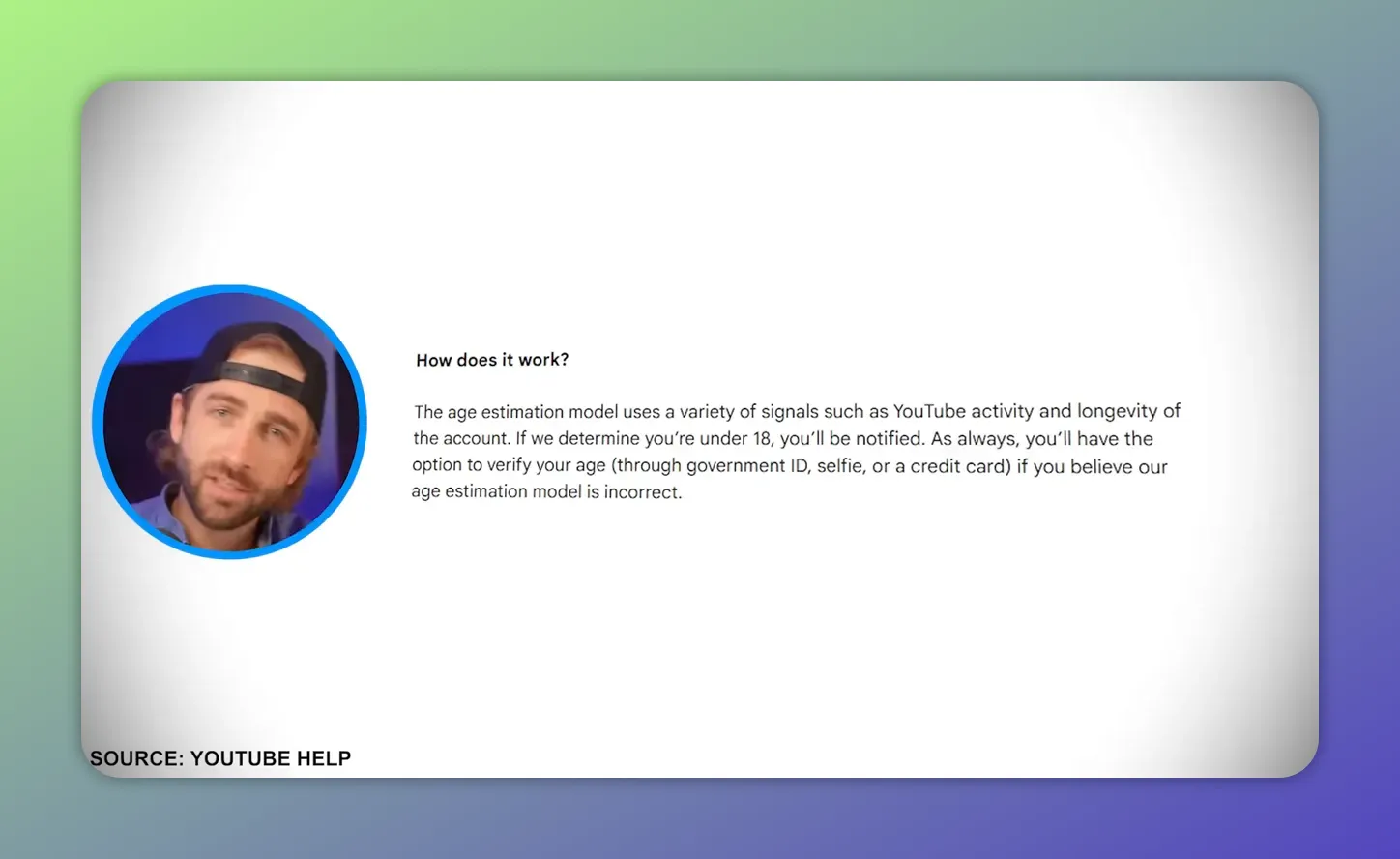
YouTube says its model looks at signals in activity and account history to estimate age. In short, it’s looking at broader behavior patterns rather than one isolated action.
An interest in gaming, anime, Roblox, Pokémon, or Minecraft is (apparently) not enough to flag an account. YouTube says the model does not judge age based on and one form of content in isolation. Instead, it evaluates many different signals together.
Still, the broader implication is clear: audience categorization is now driven by platform inference rather than self-declared profile data.
For anyone wanting a stronger grasp of how platform behavior data shapes reach and discovery more broadly, TubeBuddy’s guide on how to use YouTube analytics is a good companion read.
What happens when an account is flagged
If YouTube flags an account as under 18, the account holder is expected to receive a notification. At that point, they can choose to go through the age verification on YouTube if the system got it wrong.
YouTube says age verification options include:
- Government ID
- Selfie
- Credit card
Age verification is optional. But if the account holder does not verify, the account will be treated as a teen account.
What changes for under-18 accounts
When YouTube determines an account belongs to someone under 18, a set of teen safety protections is applied automatically. These protections are not entirely new, but YouTube is now using stronger age estimation to extend them more broadly.
Here’s what that includes.
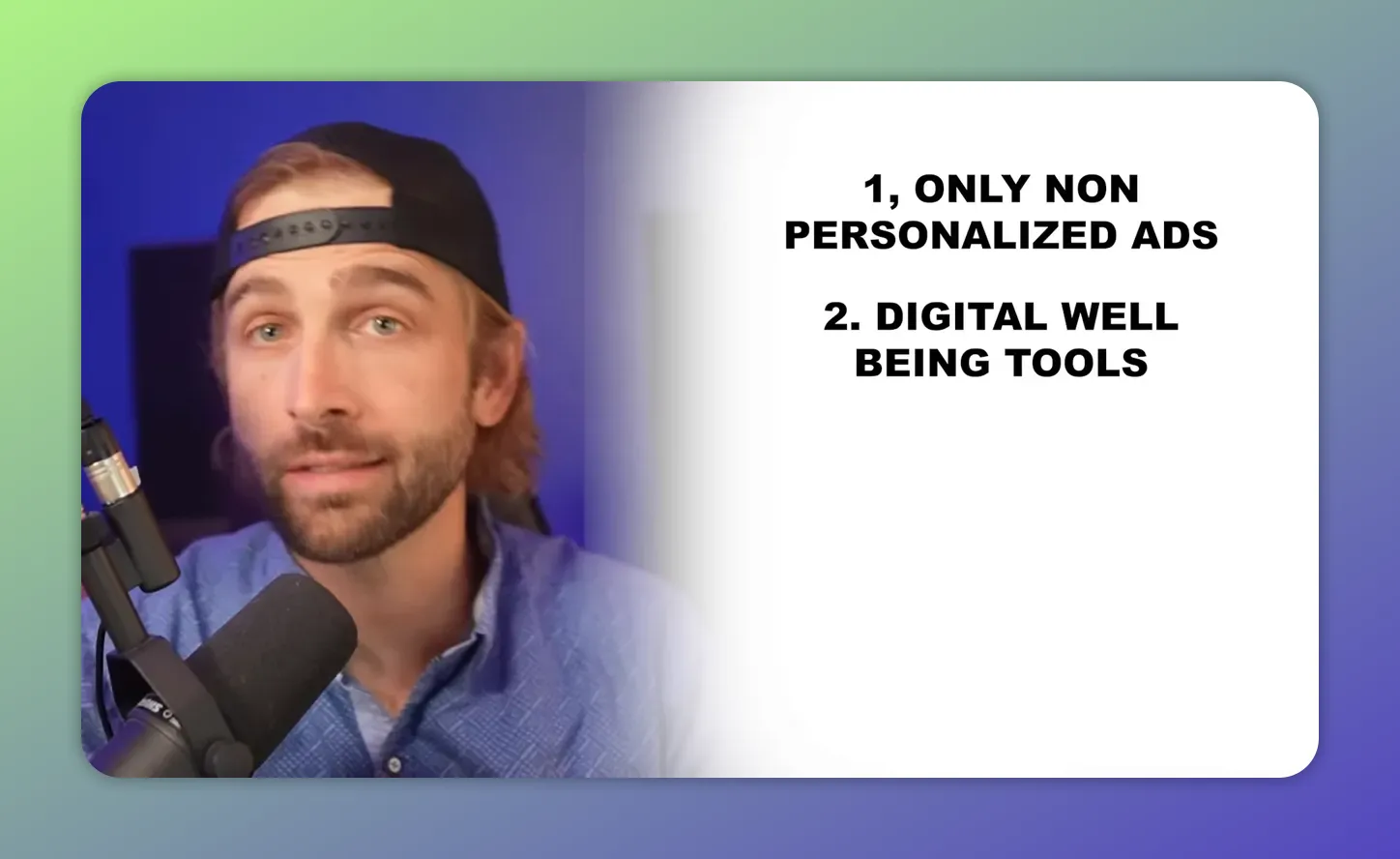
Non-personalized ads only
Accounts treated as under 18 will only be shown non-personalized ads. That is one of the biggest creator-facing consequences in this entire update, because non-personalized ads generally mean lower monetization value relative to targeted ads.
Digital wellbeing tools turned on by default
Features like take-a-break reminders and bedtime reminders will be enabled by default. These are designed as teen protections, but they will also affect any account the system classifies as under 18 unless the age is verified.
Privacy reminders around uploads and comments
YouTube will also increase privacy-related prompts around uploading and commenting behavior for accounts treated as teen accounts.
Reduced recommendations for certain repeat-watch content
YouTube says it will reduce recommendation frequency for content that may be problematic if consumed repeatedly. The platform frames this as an extension of existing teen protections rather than an entirely new content policy.
For creators studying recommendation behavior, it is worth pairing this change with a broader understanding of how YouTube recommends videos and how YouTube promotes videos through algorithm and watch time.
Why creators should care about YouTube age estimation
The big issue is that your audience composition may have already shifted inside YouTube’s systems. More of your viewers could now be categorized as under 18.
That can lead to two immediate outcomes:
- A decline in monetization efficiency for part of your audience
- Changes in how YouTube handles your content around teen protections and recommendations
If a meaningful portion of your traffic comes from younger audiences, this is not a minor detail.
TubeBuddy has covered monetization fundamentals before in posts like YouTube CPM and RPM explained and how to make money on YouTube as a small creator. This update fits squarely into that same conversation.
The revenue impact for creators
For some channels, the effect of this change may not even be felt. Channels with a strong teen audience… not so much: lower personalization means lower CPMs, and lower CPMs mean lower ad earnings from the same amount of traffic.
When revealing this update, YouTube said the impact on creators would be “limited.” And that has borne out. But the question is, does your audience profile make you an outlier?
Creators should review audience reports, keeping an eye out for any significant changes since YouTube age estimation rolled out in August, 2025. Keep an eye out for any notable changes in audience demographics, revenue, and other markers.
If you need a refresher on ad revenue mechanics, these reads may help:
Which channels could feel this most
Not every niche will experience this equally.
Channels that often appeal to younger audiences, whether intentionally or incidentally, could feel this change more sharply. Examples specifically called out include:
- Gaming
- Challenge content
- Prank content
That does not mean those channels are doing anything wrong. It means they may naturally attract a younger audience. If YouTube becomes more accurate at identifying that audience as younger, their monetization mix may shift.
Gaming channels in particular should pay attention. Even if your content is aimed at a broad audience, your actual audience may skew younger than you think. TubeBuddy’s article on how to stand out as a gaming creator on YouTube is useful background for creators in one of the categories most likely to see this change play out.
There are also creation-side restrictions
There is another layer here that is easy to miss.
If YouTube believes the account owner is under 18, uploads will default to private. In addition, that account will not be able to earn from gifts on vertical live streams.
This may not affect every creator equally, but it is relevant for anyone active in live streaming and vertical live content. Depending on the audience, these restrictions may become a real workflow and revenue issue.
For creators building around live, it’s worth reviewing related monetization features such as Super Thanks, Super Chat and Super Stickers, and broader live strategy guidance like why creators should consider YouTube Live.
What will not automatically trigger a flag
One of the easiest ways to misunderstand this update is to assume YouTube will flag someone as underage just because they interact with youth-adjacent content.
YouTube explicitly pushes back on that idea. Watching anime, Pokémon, Minecraft, or similar categories alone is not described as enough to trigger a teen classification. The system is based on many signals taken together.
That is an important nuance to understand. The risk is not “my niche is doomed.” The risk is that your aggregate audience behavior may reveal a younger audience profile than your channel strategy previously accounted for.
What this signals about YouTube’s direction
YouTube appears to be strengthening its stance around safety, trust, and age-appropriate experiences in a way that serves multiple goals at once:
- Improving teen protections
- Building trust with parents and regulators
- Creating more brand-safe environments for advertisers
- Competing more effectively with platforms leaning into commerce, safety, and trust
That makes this update bigger than just a compliance adjustment. It is part of a long-term signal about what kinds of platform behaviors YouTube wants to reward and what kinds of risks it wants to reduce.
Brand safety has a direct connection to future monetization and distribution. If YouTube can reassure major advertisers that it is taking underage protections seriously, that can strengthen advertiser confidence across the platform.
That is why creators should see this through both a defensive and offensive lens: yes, protect your current revenue, but also align with where the platform is heading.
For broader context on how platform changes intersect with creator income and partnerships, see creator safety and brand partnerships. For YouTube’s own broader company news and product context, keep an eye on the official YouTube blog.
What creators should do
This is the practical section. If you create content that appeals to a younger audience — or you’re not sure whether your channel skews teen — here are the most useful next steps.
1. Check YouTube Studio for flagged content
Start by using the age restriction filter in YouTube Studio to see whether any content has already been flagged. That gives you an immediate sense of whether your library may already overlap with sensitive age-related enforcement or protection systems.
If compliance and platform rules are areas you want to stay ahead of, these TubeBuddy resources are worth bookmarking:
2. Review your audience reports
Audience reporting has already shifted for many channels as this model influences classification. Keep an eye on who YouTube says your content reaches — and compare current numbers against what you were seeing before mid-2025.
If you have not been reviewing analytics closely, now is the time to start. TubeBuddy’s guide to finding your audience on YouTube can help frame what to look for.
Quick reminder as we move into the practical steps: review your audience data and update your monetization mix to reflect how YouTube’s age estimation model is now classifying your viewers.
3. Rethink your monetization mix if your content appeals to teens
If you create content for general audiences but know it naturally resonates with teens, ad revenue may become slightly less reliable as a sole income stream.
That means your monetization structure may need more balance. Smart options mentioned include:
- Increasing affiliate revenue
- Promoting your own products
- Building an email list
- Developing communities off-platform
This is not just good advice for this policy update. It is good creator business strategy in general. TubeBuddy has useful related reads on YouTube affiliate marketing, building a merch strategy, YouTube channel memberships, and how channels make the most money.
4. Consider aging up your content positioning
If your ad revenue takes even a modest hit because more of your audience is treated as under 18, one response is to shift your positioning so your channel attracts more adults over time.
That does not necessarily mean abandoning your niche. It may mean changing framing, examples, presentation style, topics, or monetization hooks so the content appeals more strongly to adult audiences.
This is about audience design. Who is your content really for, and does the platform see that the same way you do?
5. Future-proof your channel beyond one audience type
The channels that handle platform changes best are almost always the ones that do not depend on one revenue stream or one audience segment.
That is why this update is a reminder to build a more resilient business. If ad revenue weakens in one segment, something else should be there to carry part of the load.
If you want to make your channel more durable over time, these TubeBuddy articles are a good next step:
Get an unfair advantage on YouTube
Give your YouTube channel the upper hand and easily optimize for more views, more subs, and more of every metric that matters.
Get Started
YouTube’s age estimation model is a system that uses signals like account activity and history to estimate whether an account belongs to someone under 18, even if the account’s entered birthday says otherwise.
It matters because more of a channel’s audience may be classified as under 18, and under-18 accounts are served non-personalized ads. That can reduce ad revenue, especially for channels with strong teen appeal.
No. YouTube says the model does not rely on one type of content in isolation. It evaluates many signals together, so one interest alone is not described as enough to trigger classification.
The account holder can verify age using a government ID, selfie, or credit card. If they choose not to verify, the account will be treated as a teen account and teen protections will apply.
Those accounts will receive non-personalized ads, digital wellbeing reminders by default, additional privacy prompts, and reduced recommendation frequency for some content that could be problematic if consumed repeatedly. If YouTube believes the account owner is under 18, uploads may also default to private and gifts on vertical live streams may be unavailable.
Channels in categories like gaming, challenges, and pranks may feel the impact more strongly because those formats often attract younger audiences, even when the content is not explicitly made for kids or teens.
Start by checking YouTube Studio for age-restricted content, reviewing audience reports, and evaluating whether your monetization depends too heavily on ad revenue from younger audiences. Then strengthen alternative income streams like affiliate offers, products, memberships, and off-platform community building.
Conclusion
The YouTube age estimation model may have looked like a minor policy adjustment at first glance, but its impact on audience classification, ad revenue, and platform positioning are very real.
When YouTube rolls out a system that touches audience classification, recommendations, brand safety, and ad delivery at the same time, the impact is almost always bigger than the first announcement suggests.
The good news is that this is a manageable change if you act early. Audit your channel, watch your audience data, diversify your revenue, and make sure your content strategy aligns with where YouTube is clearly heading: safety, trust, and stronger advertiser confidence.
The creators who adapt early usually come out ahead. This update is another reminder that on YouTube, alignment is rarely optional for long-term growth.