
The biggest story in YouTube creator news for May 2026 is Ask YouTube. It’ll be a topic for debate. This Gemini-powered conversational search feature was unveiled at Google I/O 2026 on May 20 and compiles answers from across YouTube’s catalog without viewers needing to watch a full video. The AI Overviews comparison is unavoidable, and creators asking “what does this mean for my watch time and revenue?” are asking the right question.
Google I/O was the story of the month for YouTube. Alongside Ask YouTube, Google announced Gemini Omni for Shorts Remix, extending the AI creation tools we first covered in last month’s YouTube creator news update alongside Veo 3 Fast and Reimagine. The platform’s AI creative layer is expanding fast, and May’s I/O announcements will be playing out for months.
Away from I/O, May brought two creator wins that are more immediately practical. YouTube opened its AI deepfake likeness detection tool to every verified creator over 18 — not just YPP members — and added an AI music generator inside YouTube Studio that lets creators swap out a copyright-claimed track without reuploading or losing watch history. YouTube also held Brandcast 2026 at Lincoln Center, announcing CTV shopping and AI-powered sponsorship matching.
Read on for context of the major YouTube creator news for May 2026.
YouTube creator news May 2026 – Headlines
Ask YouTube turns search into a conversation… and that should make creators nervous
Google I/O 2026 happened on May 20. Among all the Google I/O news (and there was a lot of that) YouTube unveiled Ask YouTube. This is the biggest change YouTube has made to how it surfaces content in years and creators should be paying attention.
Ask YouTube is powered by Google’s Gemini AI and is billed as a “conversational search feature.” The idea is to let users ask complex questions and receive synthesized answers pulled from across the entire YouTube catalog without watching a single video. Ask YouTube is currently Premium-only and limited to US desktop users.
Why it matters
Ask YouTube is clearly taking a page from Google AI Overviews in search. Google’s embedded AI-generated answers in web search results created a sharp traffic drop for the pages that had previously answered those questions. Ask YouTube could create the same dynamic for video: if a viewer gets what they came for in the search interface — a summary, a recommendation, a how-to walkthrough — they may never click through to the video. For creators whose revenue depends on watch time, ad impressions, and session length, that might feel like a rug-pull. It’s worth thinking about now before it rolls out more broadly. Which it feels safe to assume it will.
The impact could be huge. That said, creators who make content that’s genuinely worth watching — not just informational summaries that can be easily scraped into a paragraph — will be more insulated. But the calculus that made keyword-optimized, question-answering content a reliable growth strategy on YouTube is about to get more complicated.
Via YouTube Blog: All the YouTube news from Google I/O 2026
YouTube’s new AI music tool lets you fix a Content ID claim without reuploading

YouTube’s Replace Song tool was a boon for creators. This month, YouTube expanded its usefulness with the ability to generate royalty-free instrumental tracks to replace copyright music to answer or avoid a Content ID claim. This AI tool lets creators generate four tracks, customized by mood, instruments, and context, and swap them in without reuploading the video or losing watch history, comments, likes, or monetization status. The feature is currently US-only and desktop-only; YouTube has confirmed a global and mobile rollout is planned for later in 2026.
Why it matters
Getting a Content ID claim on a video you spent hours making, and then having to choose between muted audio, lost monetization, or a full reupload that resets your view count is one of the most frustrating structural problems in YouTube production. This tool doesn’t solve the underlying copyright system but it patches the most painful outcome: losing all your traction on a published video.
For creators who use background music heavily — gaming, cooking, travel vlogging, study content — this is immediately useful. The AI-generated tracks won’t replace a carefully chosen soundtrack, but for videos where the music was incidental, swapping it out without reuploading is a significant quality-of-life improvement.
Via Music Business Worldwide: YouTube creators hit by music copyright claims can now replace tracks with AI
YouTube’s deepfake protection is now open to any creator over 18

On May 18, YouTube extended its AI deepfake likeness detection tool to all verified creators aged 18 and over. Previously, the tool was limited to YouTube Partner Program members, then expanded to politicians and journalists in March, and again to Hollywood talent in April. Creators now enroll by submitting a government ID and selfie video through YouTube Studio; the system scans newly uploaded content for unauthorized use of their likeness and surfaces removal requests. Audio detection — covering AI voice clones — is not yet included but is apparently on the roadmap.
Why it matters
Now that it’s open to all creators, it’s worth signing up to protect your likeness on YouTube. This tool has been expanding steadily since March, and we’ve been tracking it in our YouTube creator news updates since then. May’s expansion to all verified creators 18+ is the moment it becomes practically relevant for the rest of us.
Voice remains a gap. A growing category of creator impersonation involves AI voice clones used in scam content, fake endorsements, or misleading videos, and the enrollment process currently doesn’t protect against that. At least not yet.
Via Tubefilter: YouTube’s war on deepfakes goes global: Likeness detection is now open to all
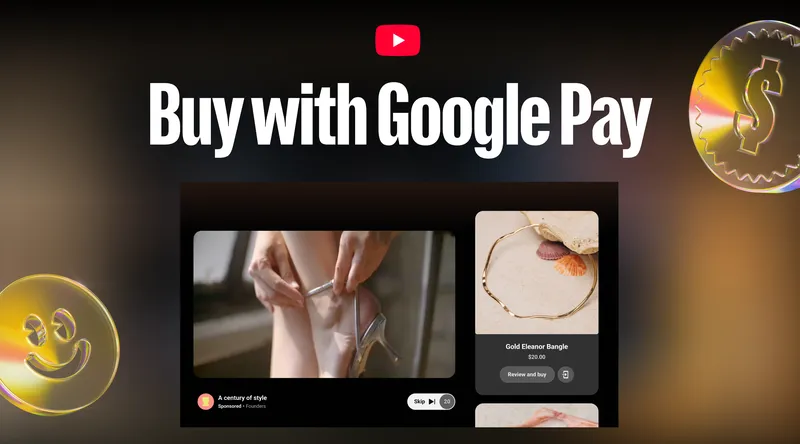
At YouTube Brandcast 2026 on May 13 in New York’s Lincoln Center, YouTube announced a couple of big things. Buy with Google Pay is a two-click checkout experience for viewers watching YouTube on connected TVs. AI-powered Custom Sponsorships will match brands to creator content dynamically based on audience overlap and organic product mentions. YouTube also announced an Affiliate Partnerships Boost letting brands amplify organic creator posts where their products are already tagged. The platform also said it has paid out more than $100 billion to creators, artists, and media companies over the past four years.
Why it matters
The CTV shopping announcement could be big. YouTube is trying to bring commerce to the TV screen. The living room has always been the worst screen for converting viewers into buyers. It’s passive and not designed for clicking. Buy with Google Pay is an attempt to bring the two-click purchase from mobile to TV. This could create a new revenue layer for product-integrated content.
AI Custom Sponsorships will matter most to mid-tier creators who don’t have agency relationships. With algorithm matching brands to channels based on audience similarity and organic mentions, creators with strong niche engagement could be exposed to brand deals they might not have been otherwise… and while that $100 billion figure is more marketing than guidance for creators, it’d be nice to get a slice.
Via YouTube Blog: Everything we announced at YouTube Brandcast 2026
Gemini Omni can now remix any eligible Short including yours
At Google I/O 2026, YouTube also announce that it’s integrating Gemini Omni into YouTube Shorts Remix and the YouTube Create app. Creators can take an eligible Short and remix it using custom text prompts and reference images. For example, changing scene aesthetics, or inserting themselves alongside the original creator. It doesn’t require any editing skills. Original creators retain control and can opt out of having their Shorts remixed. Remixed versions include watermarks and metadata linking back to the source.
Why it matters
Creators have to decide whether to opt-out. It sure sounds like YouTube will default to include creator’s content unless they choose otherwise. What counts as “eligible” for Shorts Remix will likely expand over time. Creators who don’t audit these settings in YouTube Studio may find their content being remixed, whether or not they want it to be.
On the creative side, the ability to remix with a text prompt is cool: testing different aesthetics on the same concept, building collaborative content across creator accounts, or generating derivative Shorts from a winning original. For trend-chasing creators in fast-moving niches, that kind of easy iteration could be valuable. Check your Shorts remix settings before this feature scales.
Via TechCrunch: ‘Ask YouTube’ brings AI-powered conversational search to video, adds Gemini Omni to Shorts
YouTube leads all platforms for repeat brand partnerships but disclosure compliance lags
Influencer Marketing Factory published its 2026 Brand Deals Report on May 19 analyzing more than 300,000 promotional posts across YouTube, TikTok, and Instagram to pull out some interesting findings. Apparently, 20% of YouTube posts were apparently part of ongoing ambassadorship programs, which is the highest rate across all three platforms. More than 71% of TikTok posts were one-off engagements. And apparently there’s a compliance gap when it comes to sponsorship disclosures with fewer than 20% of YouTube creators with under 100,000 subs doing proper disclosures.
Why it matters
YouTube content has a longer shelf life. It’s more valuable to brands as a sustained presence than a single activation. A YouTube video from six months ago can still be getting views where a TikTok post from six months ago might almost certainly isn’t. This explains why YouTube does better for repeat deals… and it’s a good thing for creators to keep in mind when discussing brand deals.
The disclosure finding is sobering. Fewer than one in five smaller creators is disclosing brand relationships correctly. That’s a risk for individual creators; the FTC has clear disclosure rules in place, even if enforcement lags. But more than that, it’s a credibility problem in a world where authenticity is everything.
Via Tubefilter: Repeat partnerships are the most effective creator campaigns, and YouTube leads the way
YouTube creator news May 2026: What it means
AI on YouTube is a double-edged sword for creators. On one hand, YouTube is building AI tools that lower the barrier to creation and make life easier for creators. Tools like AI music replacement, Gemini Omni in Shorts, and AI matchmaking for brand deals. On the other, features like Ask YouTube can only reduce the value of traditional “answer the question” content by giving viewers the answer without giving creators the watch time. The creators best positioned in that environment are the ones building something viewers want to experience, not just consume.
Google I/O 2026 announcements show where Google thinks things are going. Ask YouTube is in limited early access, Gemini Omni remixing is just rolling out, and these features will look very different at scale than they do today.
The more immediately actionable May YouTube creator news is less headline-grabbing: enroll in likeness detection, check your disclosure practices in any branded content, audit your Shorts remix settings, and — if you’re a US creator who’s ever lost monetization to a Content ID music claim — try the AI replacement tool before your next reupload.