
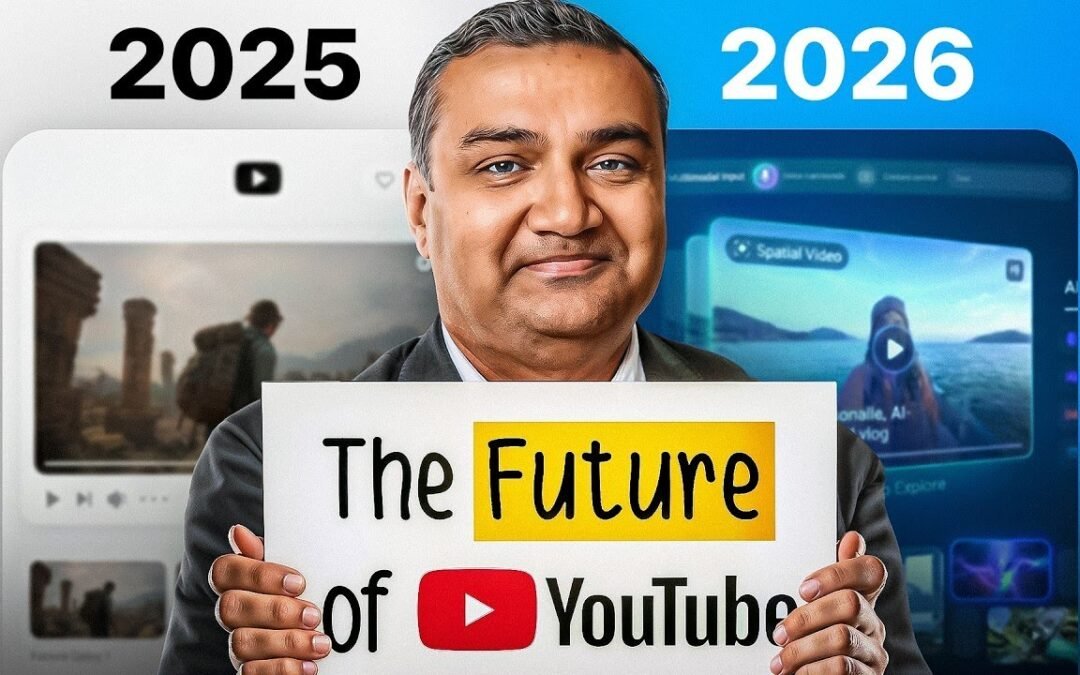
The YouTube CEO recently laid out a sweeping YouTube 2026 update for creators — four priorities that will reshape how creators earn, produce, teach, and create. If you make videos (or plan to), this guide breaks down what changed, why it matters, and the steps you need to take today so your channel is ready.

Your best content deserves to be seen
TubeBuddy’s SEO tools help you rank higher, stand out faster, and turn your great content into real channel growth.
Get started
tl;dr — the four pillars of the youtube 2026 update for creators
- Monetization beyond ads: YouTube is building a full creator economy with shopping, brand partnership tools, and expanded fan funding.
- Creators as studio producers: Expect TV-style series, studio-quality tools, and industry recognition for creator-produced content.
- Kids and education: Stronger parental controls, age-appropriate tools, and increased focus on learning content.
- AI everywhere: New AI creation tools paired with disclosure rules, labels, and controls around likeness and synthetic content.
Why this update matters right now
YouTube paid creators $100 billion over the last four years. Creators in low-CPM niches might find that hard to believe and even in the most profitable YouTube niches, ad revenue alone isn’t enough.
The YouTube 2026 update for creators pushes the platform to be an entire creator economy. Not just an ad network. That means new revenue paths, different creative expectations, and new policy guardrails (especially around AI and kids).
Change #1: monetization beyond ads

The first big point in the YouTube 2026 update for creators is that the platform wants to help creators make real money with monetization tools that go beyond a simple revenue share on ads served.
YouTube Shopping exploded in 2025, with 500,000+ creators using it and some making millions. Expect in-app commerce to be easier and more native, plus a dedicated Brand Partnership Hub so sponsors can discover creators quickly. Fan funding (memberships, Super Chat, Super Thanks) is also expanding, which means there are more ways to earn money on YouTube than ever before.
Action checklist:
- Enable YouTube Shopping, channel memberships, and Super Chat if you qualify.
- Explore the Brand Partnership Hub and declare sponsored YouTube content correctly.
- Diversify: add merch and affiliate links to reduce reliance on CPM ads.
Change #2: creators becoming the new Hollywood

Next is a trend we’ve heard a lot about and that the YouTube 2026 update for creators seems to be doubling down on; content creators as the “new Hollywood.” This highlights the shift toward series and studio-quality work.
Creators are producing episodic, studio-quality content that looks more like streaming TV than a typical YouTube upload. With creators now indirectly competing with major streaming services, YouTube is giving tools and recognition for longer, bingeable series. That changes what the platform rewards: consistency, playlists built like seasons, and production value.
Think less one-off video and more seasons and episodes. Build playlists with a single idea and plan for binge behavior. It’s a shift, but everything you’ve learned about audience retention, making your videos better, and maybe even entering into content partnerships with other creators will help to set you up for success.
Change #3: kids, learning, and family controls

YouTube is sharpening its focus on learning and family controls.
YouTube is leaning into education: studies show ~93% of 18–24 year olds use YouTube to learn, and 79% of teachers use it in classrooms. In response, YouTube rolled out stronger parental controls (including the ability to limit or block Shorts), easier kids account setup, and more rigorous content labeling by age.
If your channel includes educational content, label it correctly and consider formats that work in classrooms (playlists, chapters, and quizzes). If you make content that could be considered educational, take advantage of all the YouTube learning and education features already present in the platform.
Change #4: AI everywhere (and the rules that come with it)

There’s no stopping AI and YouTube isn’t ignorant to that fact.
Expect to see AI tools on YouTube grow rapidly: AI-generated Shorts, synthetic voices and music, AI-assisted games, and AI avatars you can use to create content. At the same time, YouTube is requiring disclosure and labeling of synthetic content, adding controls for use of a creator’s likeness, and supporting legislation like the NO FAKES Act.
Practical advice:
- Always disclose synthetic content and follow YouTube’s AI labeling rules (and watch for changes to YouTube’s AI content policies as they’re rapidly evolving).
- If you use AI to generate voices or likenesses, get written consent and turn on YouTube’s likeness controls where available.
- Experiment, but protect your brand: treat AI tools as assistants, not replacements for your voice.
How to adapt your channel in 2026
Change is a constant in the creator economy. Here’s what creators can do to be in the best position to ride this latest wave.
- Prioritize revenue diversification: set up shopping, memberships, and fan funding now.
- Plan episodic series and optimize playlists for binge discovery.
- Label educational content and use YouTube’s learning features when relevant.
- Create an AI policy for your channel: content disclosure templates, consent forms, and an approval process for synthetic content.
More resources for YouTube creators from the TubeBuddy blog
FAQ
What is the single most important change in the youtube 2026 update for creators?
The biggest shift is monetization beyond ads: native shopping, improved brand partnerships, and expanded fan funding. This creates reliable revenue options for creators in low-CPM niches.
Do I need to use AI on my channel?
No, you don’t have to use AI… but it can be incredibly helpful. Use AI where it saves time or expands creative possibilities, but follow disclosure rules and protect your likeness and audience trust.
How should I prepare my channel for episodic content?
Plan series arcs, publish consistently, create playlists that act like seasons, and optimize titles/descriptions for binge discovery. Creating a manageable content calendar and TubeBuddy tools for playlists and SEO optimizing YouTube content for discovery are great places to start.
Where can I find updates to YouTube’s AI and disclosure policies?
Watch the official YouTube blog and follow policy summaries on TubeBuddy, including our monthly round-up of YouTube news (coming soon).
Final thoughts on the YouTube 2026 update for creators
These latest directional and policy updates are both an opportunity and a test for creators with more ways to make money, higher production expectations, a clearer definition for the role of YouTube and content creators in education, and powerful AI tools that must be used responsibly.
Start by enabling new monetization features, rethink content as series, label and protect educational and AI content, and keep learning. If there’s one constant in YouTube and in the larger creator economy, it’s change. To be a successful creator means seeing where YouTube is going and positioning your channel to take advantage of the evolution.
Your best content deserves to be seen
TubeBuddy’s SEO tools help you rank higher, stand out faster, and turn your great content into real channel growth.
Get started