

YouTube AI demonetization is no longer a fringe issue affecting only obvious spam channels. Enforcement has teeth and creators using repetitive formats, interchangeable packaging, or fully automated production are finding out the hard way that monetization risk now extends far beyond low-effort content farms.
This is less about whether AI touched your workflow and more about whether your uploads feel original, human, and meaningfully different from one another. If your channel is full of the same video repeated over and over with minor changes swaps, YouTube will likely see it as inauthentic. And your channel may be caught up in the ongoing YouTube AI demonetization sweep.
For creators trying to stay safe, the smartest move is to understand what triggers YouTube AI demonetization, audit your channel before YouTube does, and build systems that keep your content distinct. If you want a broader policy breakdown, TubeBuddy’s guide on YouTube AI monetization best practices deserves a read.

Get an unfair advantage on YouTube
Give your YouTube channel the upper hand and easily optimize for more views, more subs, and more of every metric that matters.
Get Started
Why YouTube AI demonetization is accelerating
YouTube’s leadership has publicly acknowledged a growing problem with low-quality AI output flooding the platform. Enforcement ramped up. Some major, AI-heavy channels were removed. This included channels with massive subscriber counts and billions of combined lifetime views.
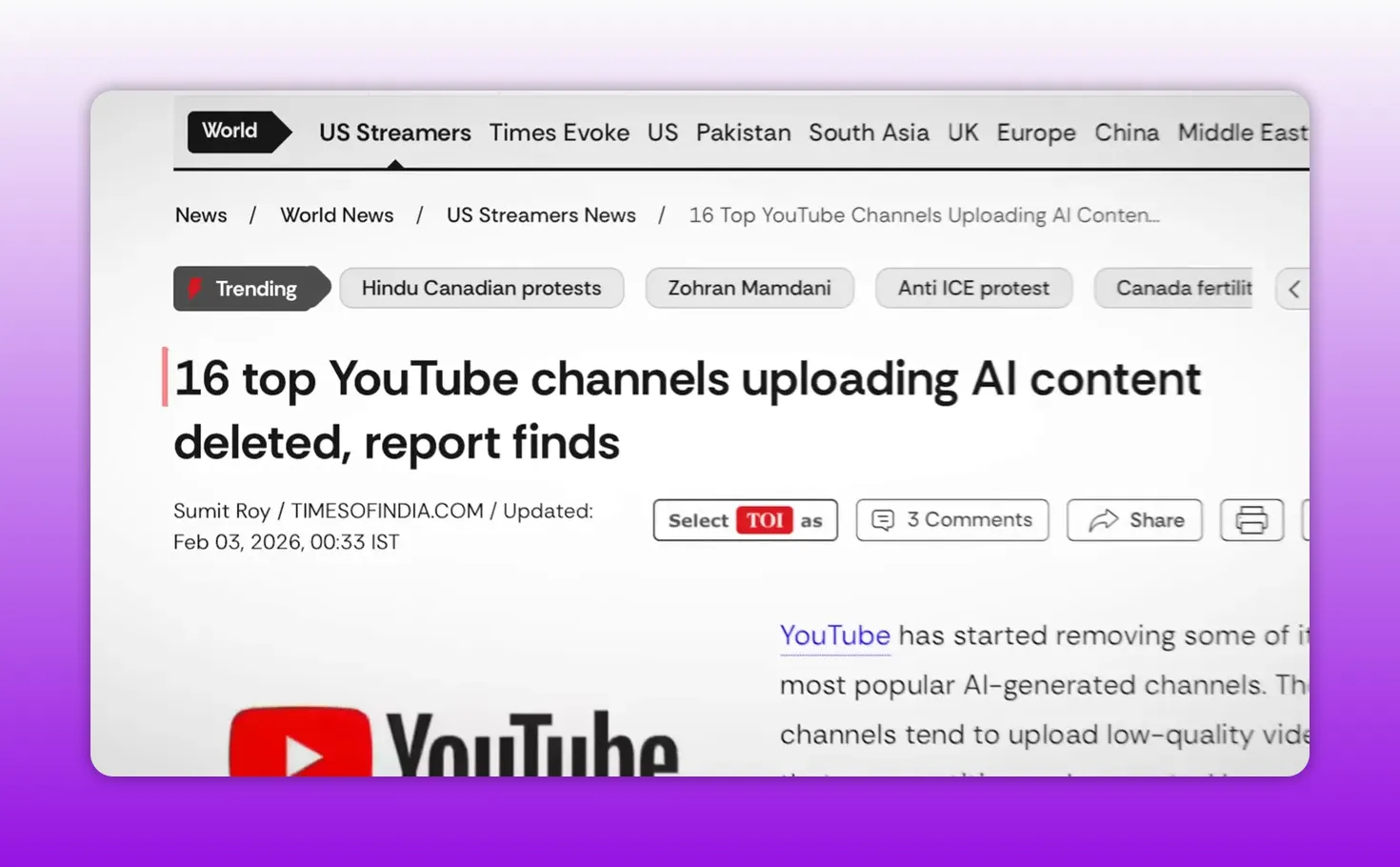
This is not a just YouTube policy change. YouTube AI demonetization is active, visible, and affecting channels at scale. Once the platform recognized it had a quality problem, it started taking decisive action to address it.
YouTube is clear on the fact that using AI in creation is not against its policies. The company continues to release AI-assisted creation features. On the official YouTube blog, YouTube has highlighted AI tools designed to help creators work faster and reach new audiences. So it’s not a simple “AI is bad” stance. The issue is low-effort, interchangeable output, mass-produced content: YouTube AI slop, but not just YouTube AI slop.
YouTube AI demonetization warning signs of
A common misconception of YouTube AI demonetization comes from assuming only garbage content gets flagged. That is not what we’re seeing.
A creator can make polished videos, get tons of views (demonstrating the viewers respond), generate real revenue, and still run into trouble if the channel becomes too repetitive. The risk can shows up when a channel lands on a successful format and starts producing that content format at scale.
Current YouTube AI demonetization patterns suggest that consistency is one thing but overwhelming “sameness” will get a channel on YouTube’s demonetization radar.
A real example of how a channel can get demonetized
One of the clearest examples is a history storytelling channel that built long-form, sleep-friendly videos using AI narration. This wasn’t random nonsense. The videos had a niche, a clear use case, and meaningful audience traction. At its peak, the channel reportedly generated substantial ad revenue over a relatively short period.
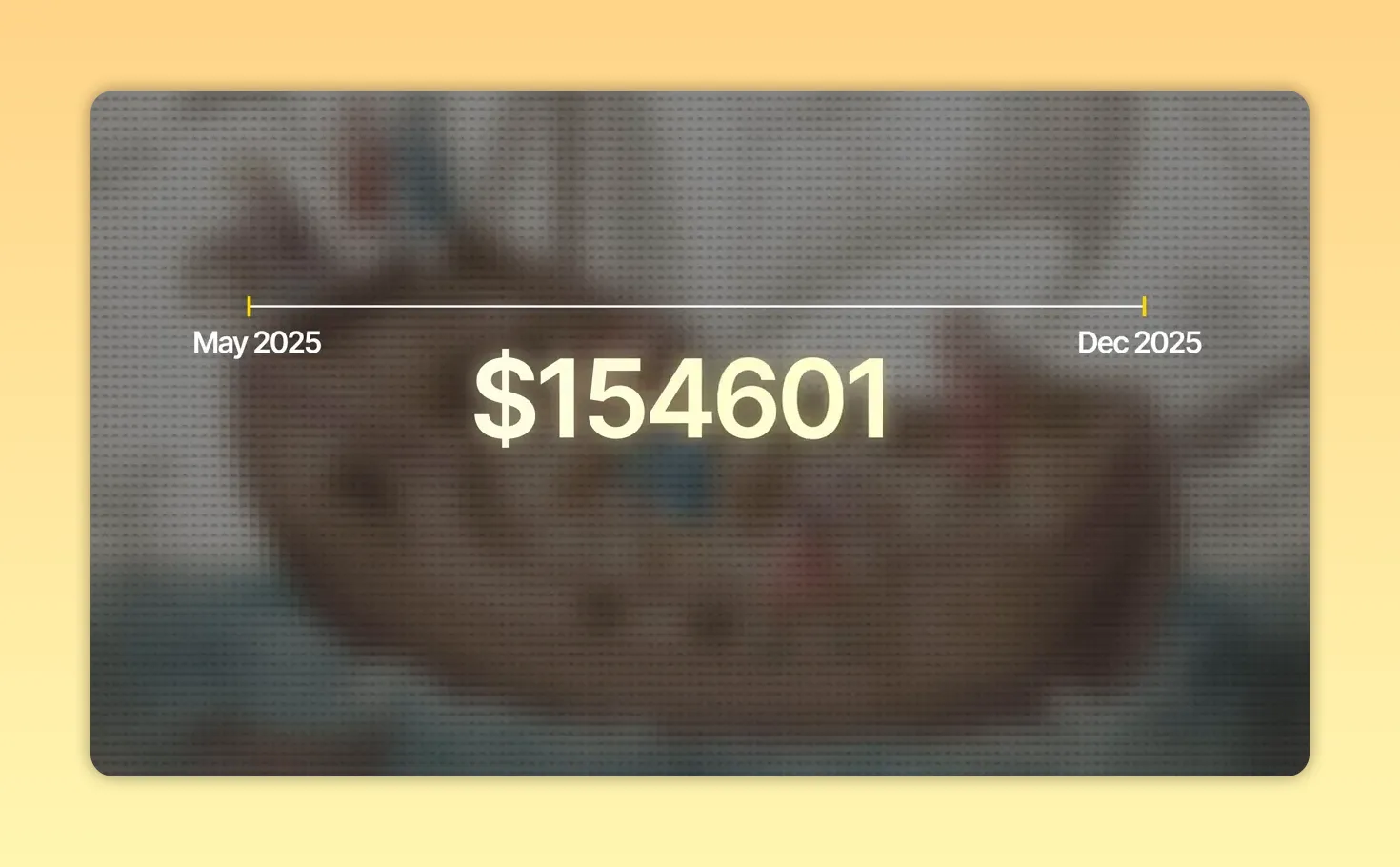
Then YouTube pulled the rug.
It wasn’t one isolated factor but a series of repeated signals that killed the channel. Three patterns stood out:
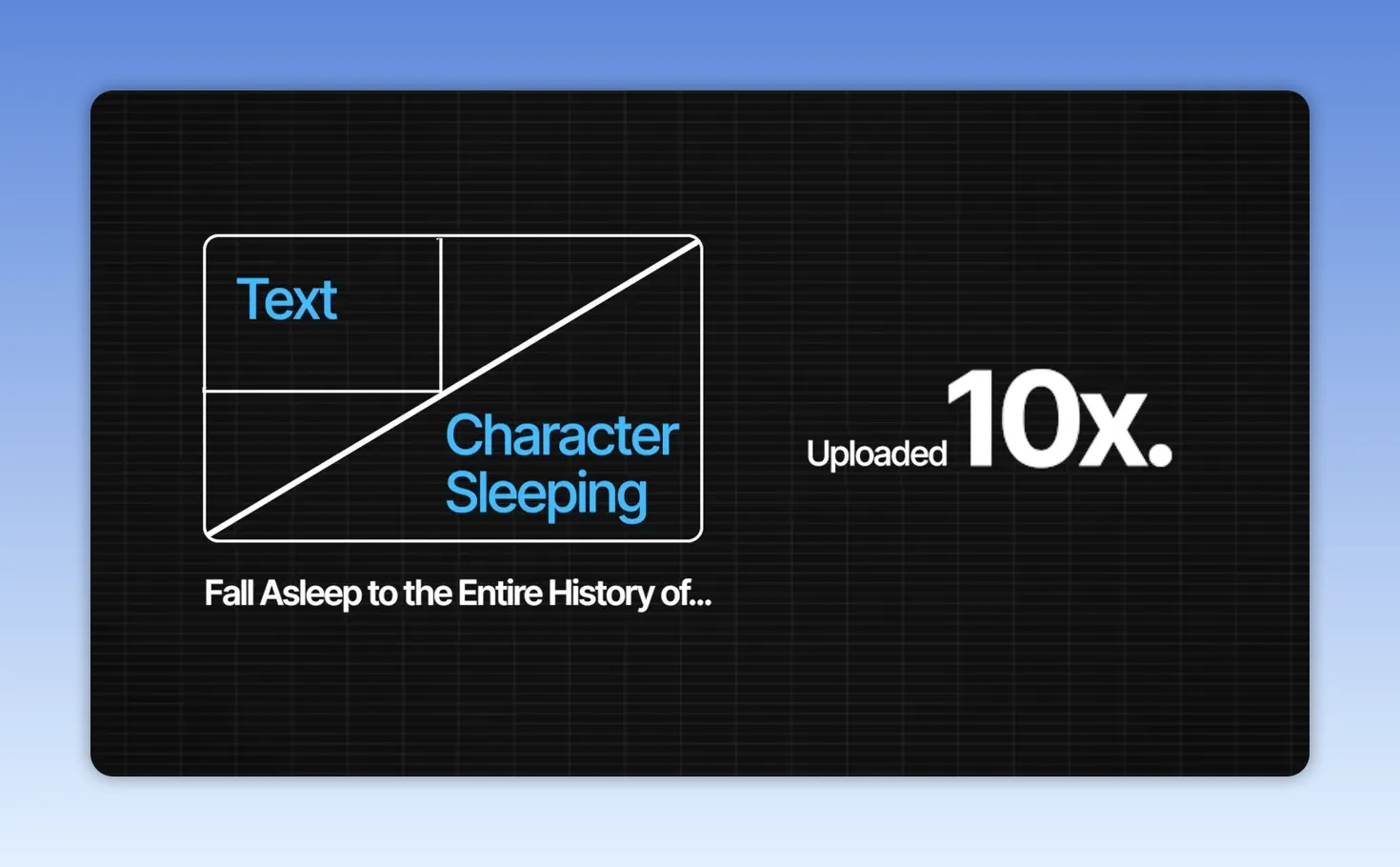
- Nearly identical thumbnails across the channel
- Titles built with the same repeatitive structure
- Long slideshow-style videos with slow-moving generated visuals
Each of those, on its own, might not have been fatal. Together, they created a channel-level pattern that caused YouTube to decide this channel wasn’t offering real value.
The three patterns that raise risk
1. Identical thumbnails
Using a recognizable thumbnail style is good. The problem begins when every upload uses the same layout, same text placement, same composition, and same overall visual logic with only tiny changes.

At that point, your library stops looking branded and starts looking cloned. Branding helps audiences recognize your work. cloning makes your work feel automated.
If your thumbnails can be mistaken for the same asset repeated ten times, that is a red flag for YouTube AI demonetization.
2. Recycled title structures
Title consistency is also good. But a copy-paste formula repeated indefinitely sends a negative signal.
There is a meaningful difference between:
- a channel with a repeatable content promise
- and a channel where every title is effectively the same sentence with one noun changed
When titles are mechanical, it suggest the underlying videos will be too. Even if the topic changes, the channel can start feeling mass-produced.

This is one of the easiest places to self-audit. Open your latest uploads and ask whether the wording reflects genuinely different angles, or whether you’re just running the same template on loop.
3. Slideshow-style video construction
The third pattern is the easiest one to misread as an AI problem when it is really a format problem.
If a video is essentially a long sequence of slowly panning still images, the issue is not necessarily that the images were AI-generated. The same problem could happen with stock photos, archive images, or public-domain art. If the structure feels static and endlessly repeatable, YouTube may see very little original transformation from upload to upload.
That’s why YouTube AI demonetization often has less to do with the tools or the specifics of how videos are being created and more to do with the final product.
What YouTube means by inauthentic content
YouTube updated its monetization language by reframing what many creators used to think of as “repetitious content” into a clearer label: inauthentic content.
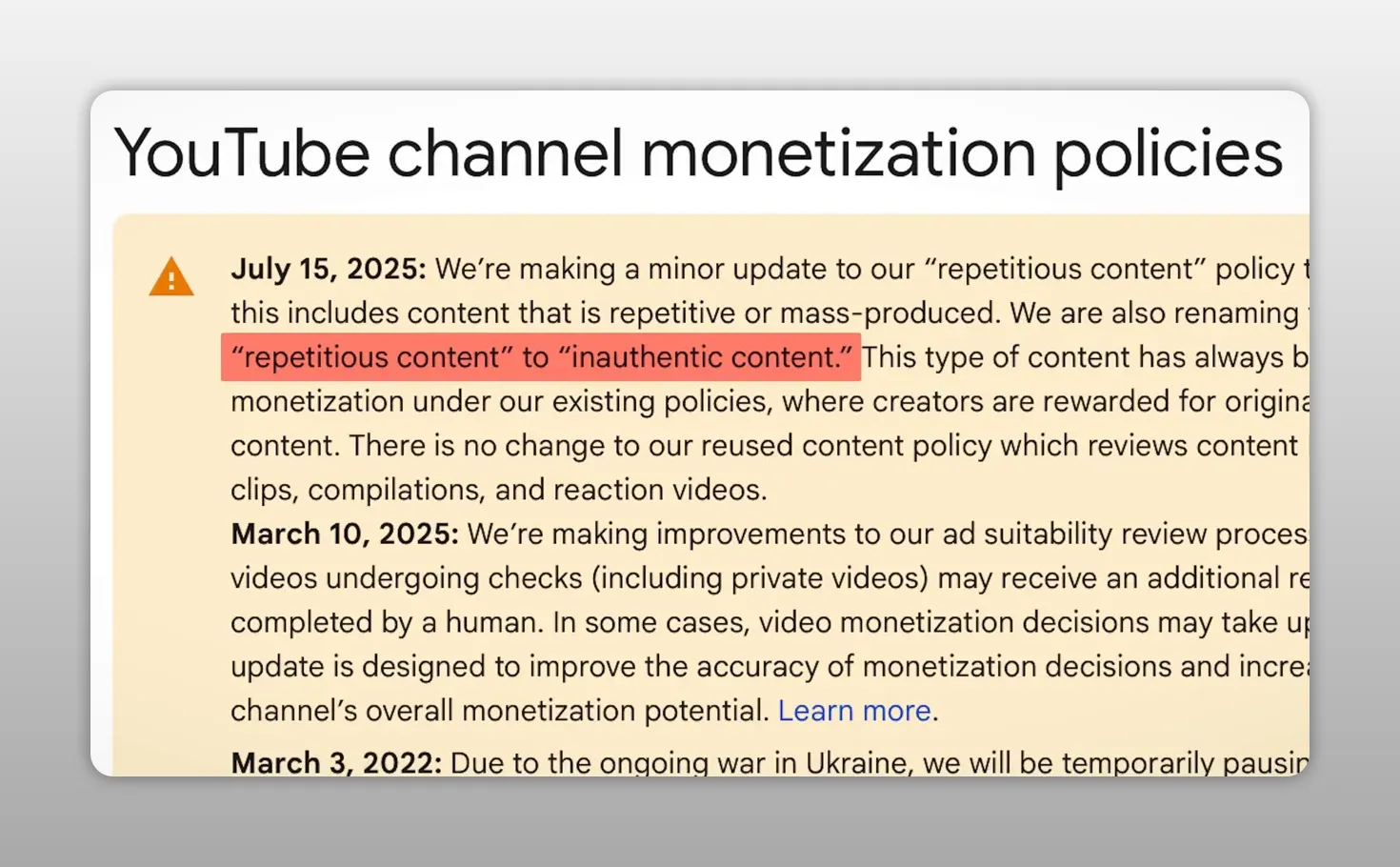
That wording matters. “Repetitious” sounds like a formatting issue. “Inauthentic” is a deeper quality judgment: whether the content appears original, intentional, and substantively distinct.
The practical takeaway is simple. YouTube tends to reward content that feels like it came from a creator making actual editorial choices. It becomes skeptical when uploads feel mass-produced, formulaic, or interchangeable.
If you’re trying to understand where this fits into the bigger revenue picture, TubeBuddy’s YouTube monetization update and YouTube monetization requirements guide can help put these enforcement changes into context.
Do the 10-video test
Here’s a straightforward way to assess your own risk of YouTube AI demonetization: pull up your last 10 videos side by side.
Then ask:
- Do the thumbnails all use essentially the same layout?
- Do the titles all follow the same rigid sentence pattern?
- Do the videos share nearly identical pacing and structure?
- Would an outsider describe them as distinct uploads, or as one upload repeated ten times?
If your channel fails that test, YouTube may not see ten separate works. It may see one formula reproduced at scale.
And that is exactly the kind of pattern behind much of today’s YouTube AI demonetization.
Consistency vs. interchangeability
This does not mean every video must reinvent your channel. That would be bad advice.
There’s a balance creators need to strike to be successful in this new YouTube reality.
Strong channels often have recurring structures, recognizable packaging, familiar intros, and focused subject areas. That kind of consistency helps build audience expectation. The invisible line between consistency and interchangeability is where the trouble lies.
A healthy channel can have:
- a recognizable visual brand
- a repeatable content framework
- similar topics within a niche
- shared editing patterns
But each upload still needs its own reason to exist. It should offer a different angle, insight, story, example, or payoff. When that difference disappears, monetization risk rises.
Get an unfair advantage on YouTube
Give your YouTube channel the upper hand and easily optimize for more views, more subs, and more of every metric that matters.
Get Started
AI is allowed, but human value has to be obvious
YouTube is not banning AI workflows.

You can use AI for research, ideation, dubbing, writing assistance, clipping, translation, organization, and throughout production. The problem starts when AI is responsible for the whole pipeline and the creator adds little to no meaningful judgment on top.
A “safe” workflow is one where AI assists, but a person still shapes the final result through topic selection, structure, commentary, editing choices, and original framing.
If you want to pressure-test a draft before publishing, TubeBuddy’s YouTube demonetization audit tool can help identify potential monetization risks before they become channel problems.
Four behaviors most likely to trigger YouTube AI demonetization
The current enforcement landscape points to four especially risky patterns.
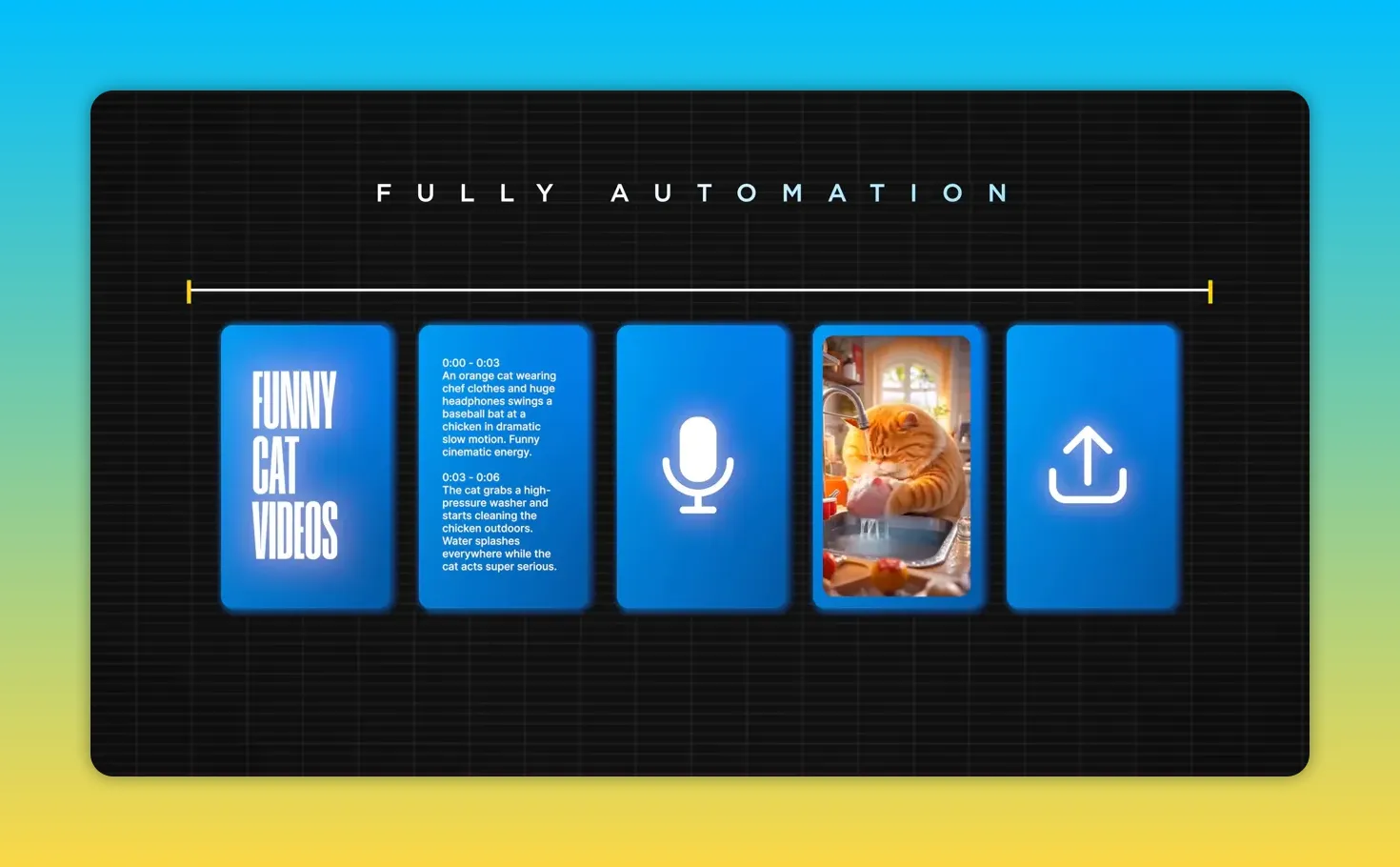
Full automation
This is when the idea, script, voiceover, visuals, and upload process happen with little or no real human involvement. If nobody is making creative decisions along the way, the final output is far more likely to feel synthetic and disposable.
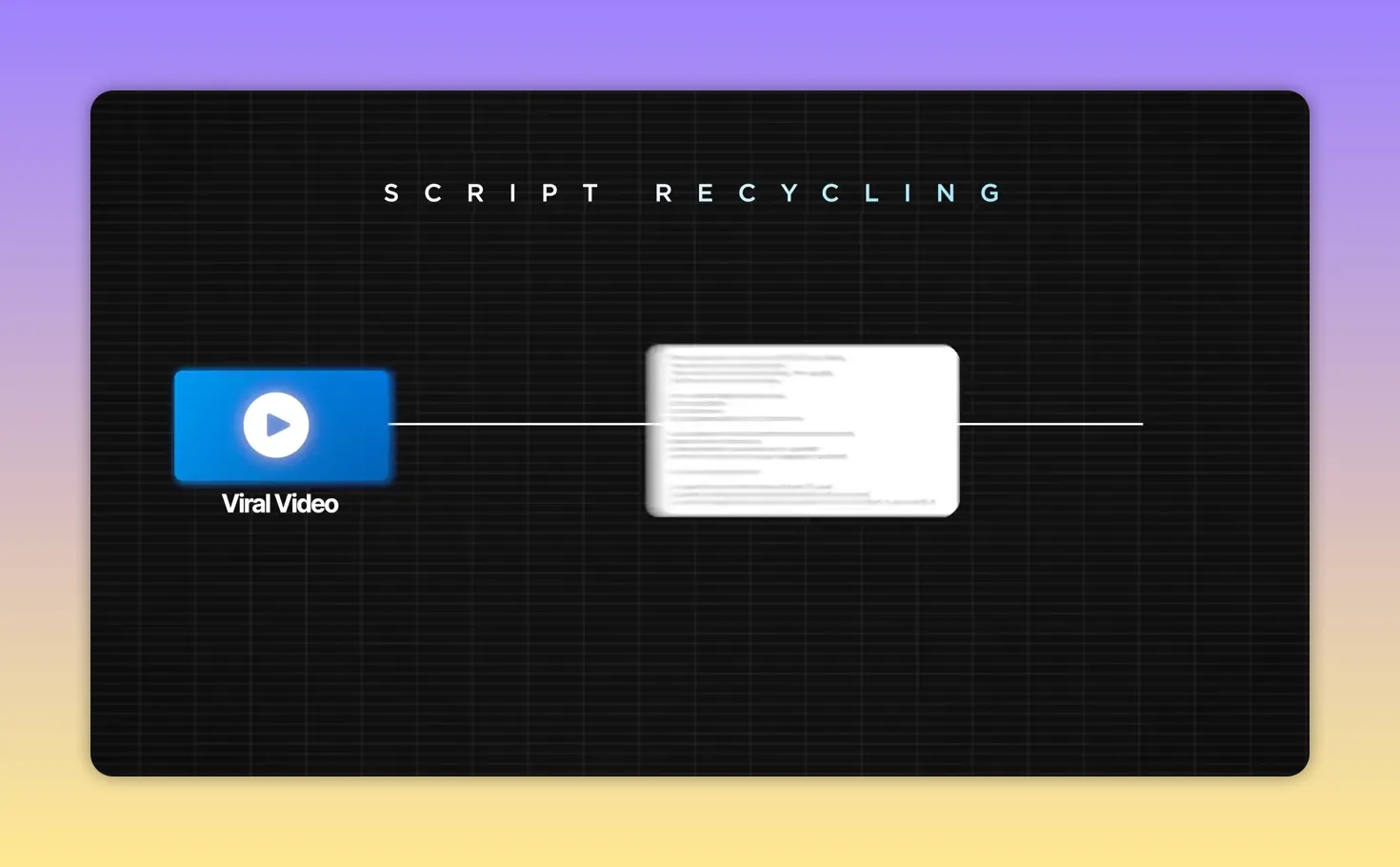
Script recycling
This happens when creators take a high-performing script, swap in a few words, and republish it as something “new.” It may look different on the surface, but the core value hasn’t materially changed.
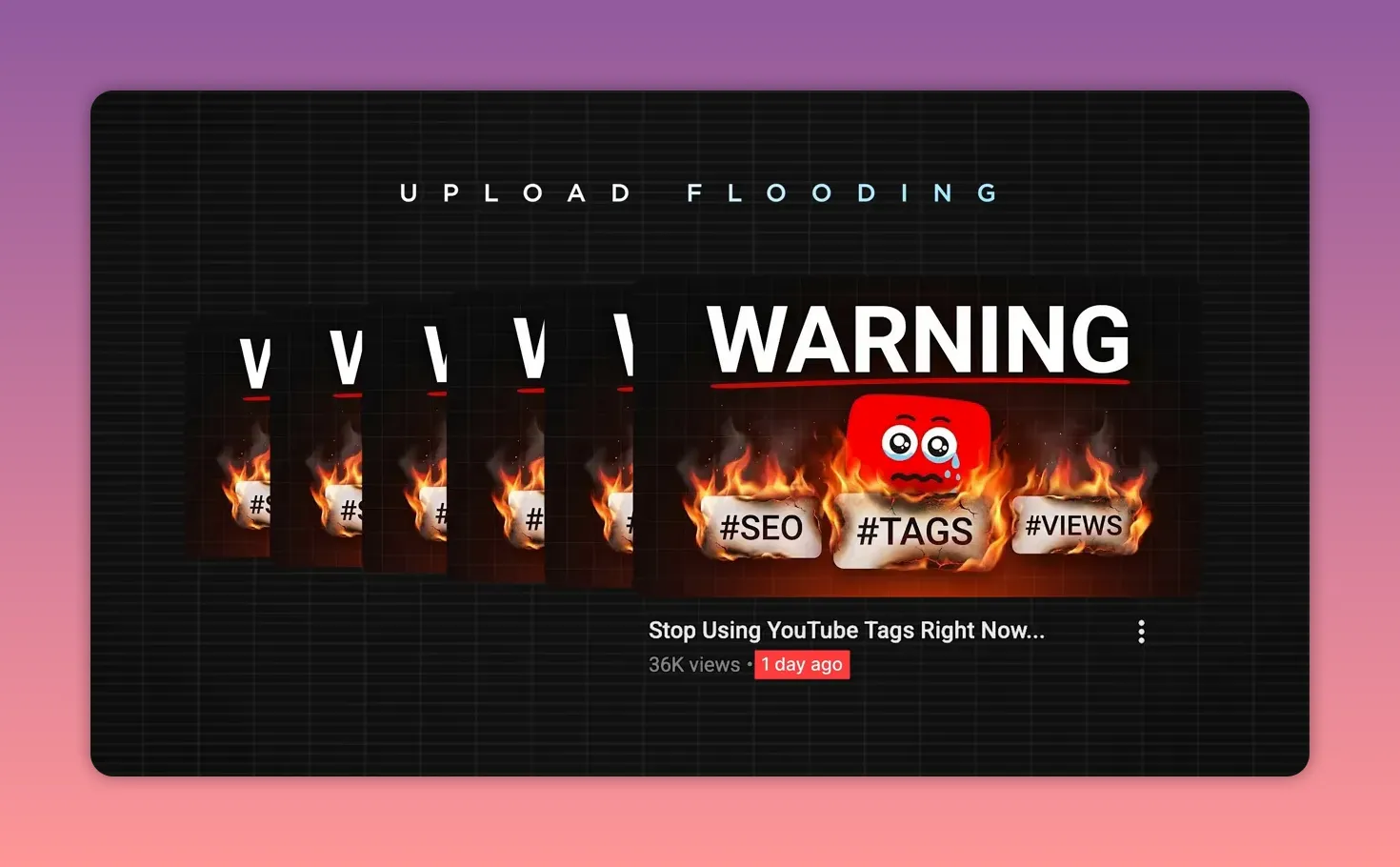
Upload flooding
Publishing several long-form videos in a single day, or uploading multiple near-identical variants to test performance, can create the appearance of mass production. It signals scale over substance.
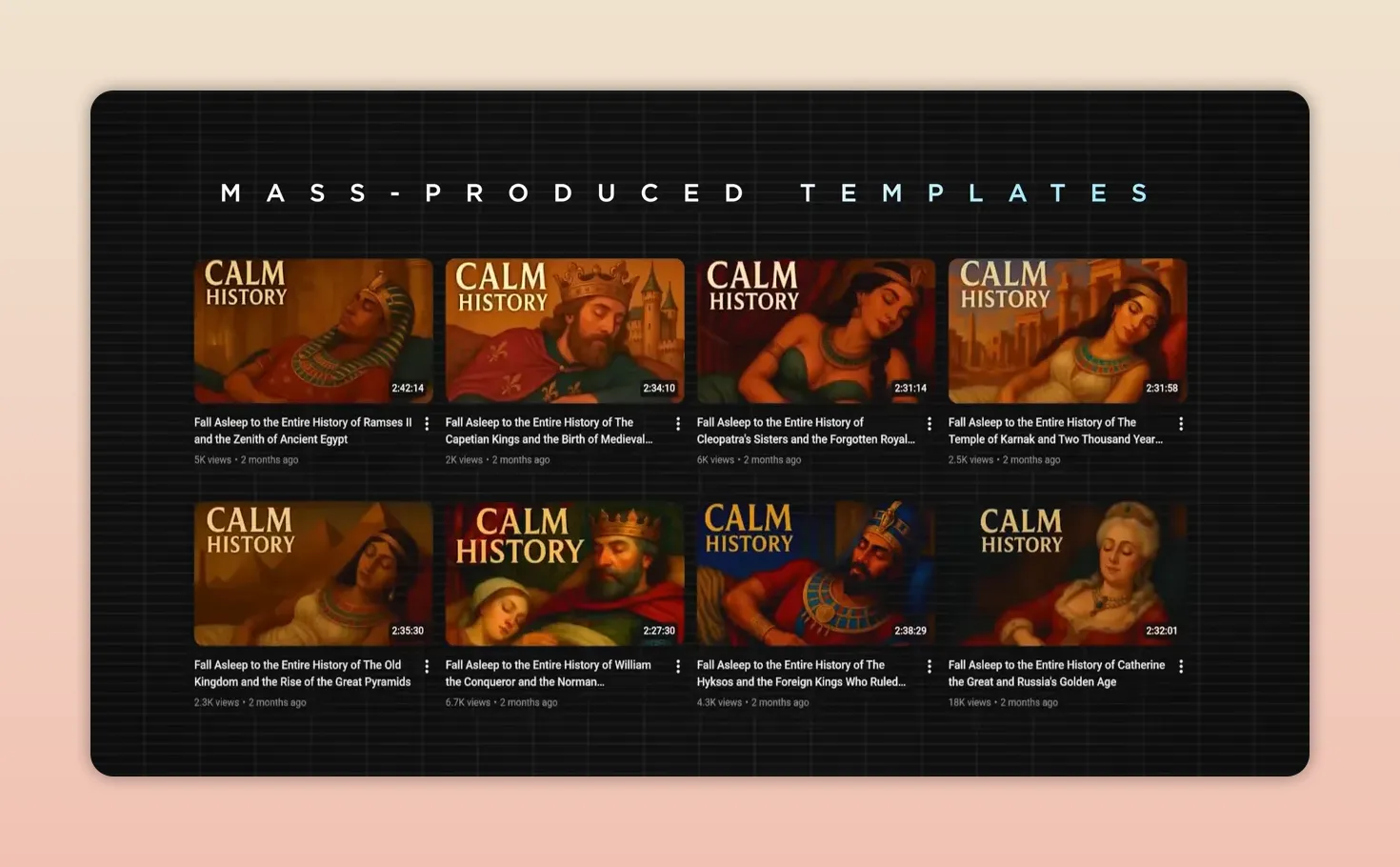
Mass-produced templates
This is the broadest category and the one most creators should take seriously. If every video shares the same structure, same rhythm, same packaging, and same payoff with only one swapped detail, the channel starts looking like a template machine.
How to stay safe without abandoning AI
If you want to avoid YouTube AI demonetization, the goal is not to stop using AI. The goal is to make your authorship unmistakable.
Here are the practical habits that help:
- Vary your thumbnail structure enough that each upload feels distinct
- Write titles around the specific value of the video, not a rigid recurring sentence
- Change your angle, argument, or story from one upload to the next
- Layer real commentary, interpretation, or expertise onto AI-assisted output
- Resist the urge to flood your channel with high-volume, low-difference uploads
- Use production systems that support originality rather than scale for its own sake
It also helps to build a tighter publishing process. A good pre-publish review can catch repetitive packaging before it goes live. TubeBuddy’s YouTube video checklist is useful for that kind of quality control.
The simplest rule to remember
If your content could be described as interchangeable, it is at risk.
If your content feels shaped by a creator making real decisions, it is safe… at least, as safe as it can be on a platform you don’t own.
That is the clearest lens for understanding YouTube AI demonetization right now. YouTube is not declaring war on AI. It is pushing back against content that feels mass-produced, low-difference, and inauthentic.
Creators who use AI thoughtfully, add real value, and make each video substantively different are still in a strong position. Creators who automate everything and clone their own format until it becomes indistinguishable are left exposed.
Additional resources
Frequently asked questions – YouTube AI demonetization
No. The bigger issue behind YouTube AI demonetization is not the use of AI itself, but the publication of content that feels mass-produced, repetitive, or lacking meaningful human input.
In practice, inauthentic content is content that appears repetitive, interchangeable, or produced at scale without enough originality or distinct value from one upload to the next.
Similar thumbnails alone may not cause a problem, but when nearly identical thumbnails are combined with repeated title structures and cloned video formats, they can contribute to YouTube AI demonetization.
Review your last 10 uploads side by side. If they look like the same video repackaged repeatedly, your channel may be showing the kinds of patterns YouTube currently flags as inauthentic.
Use AI as an assistant, not a replacement. Keep human decision-making visible in topic selection, scripting, editing, commentary, packaging, and the unique angle of each upload.
Get an unfair advantage on YouTube
Give your YouTube channel the upper hand and easily optimize for more views, more subs, and more of every metric that matters.
Get Started