
tl;dr – YouTube monetization requirement changes
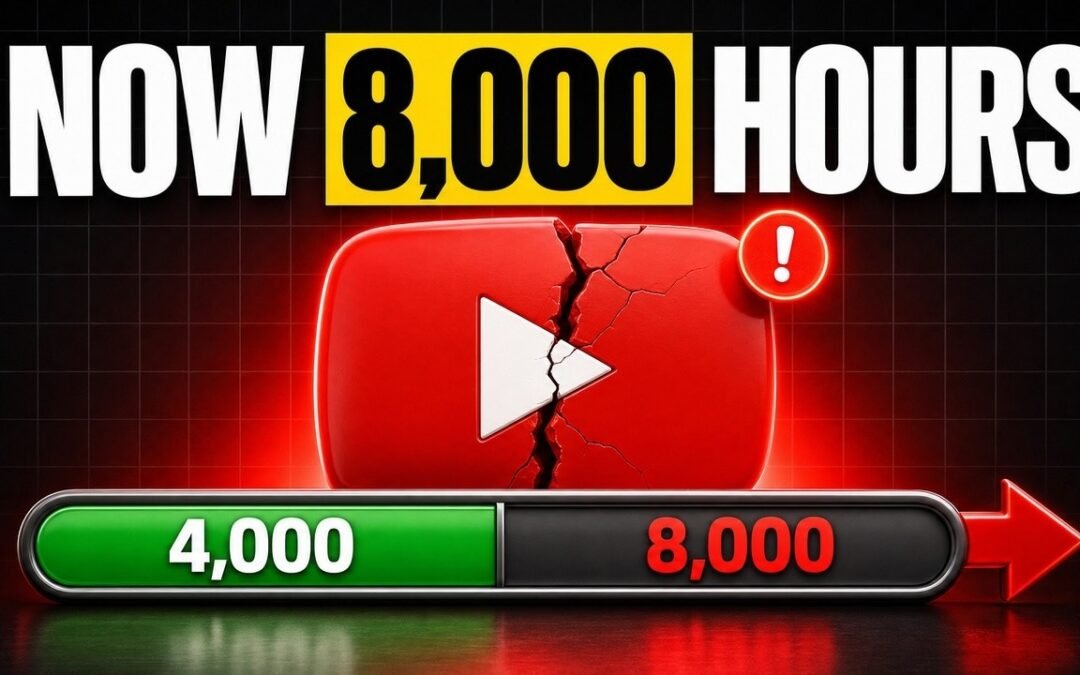
- From February 1, 2027, new creators need 1,000 subscribers plus 8,000 qualified watch hours for long-form ad and Premium revenue sharing.
- If you haven’t already monetized your YouTube channel but you meet or are nearing the current YPP requirements, apply as soon as possible.
- New Shorts revenue-sharing applicants need 20 million qualified views in 90 days, then 10 million views every 90 days to keep earning Shorts revenue.
- The 500-subscriber YPP tier remains available for fan funding and Shopping features, but not watch-page or Shorts feed ad revenue.
- Existing monetized creators do not need to requalify at 8,000 hours, but should meet activity requirements and accept updated terms.
Creators, steel yourself for the biggest YouTube monetization change of the last 10 years.
The upcoming YouTube monetization changes raise the bar for new creators who hope to earn from watch-page ads, Shorts feed ads, and YouTube Premium revenue. It also tightens the ongoing requirements for existing creators who have already made it into the YouTube Partner Program (YPP).
While the post on the official YouTube blog buries the lede, we’re not going to do that. Here’s what you need to know:
Beginning February 1, 2027, the requirements for full ad revenue sharing increase dramatically. The short version:
The 1,000 subscribers gate stands but the watch hours requirement doubles for long form videos; 8,000 watch hours in the last 12 months vs. 4,000 watch hours previously. Or to qualify for full monetization in the YouTube Partner Program (YPP) with YouTube Shorts, you’ll need twice the views; 20 million Shorts views over the last 90 days vs. 10 million previously).
Another new requirement for monetization, specifically with Shorts: every creator who wants to get paid from YouTube shorts will need to maintain 10 million views over a rolling 90 day period. If view numbers drop off, so does your share of Shorts revenue until you get back over the 10 million views mark.
The entry requirements for lesser YPP admission (500 subscribers plus 3,000 watch hours over the past 365 days or 3 million Shorts views over 90 days) remain unchanged. Entry-level YPP admission unlocks channel memberships, gifts, supers, Shopping, and the potential for YouTube creator partnerships. It does not give creators a share of ad or subscription revenues.
This is a big change with a hard deadline attached. Any creator that has been trying to qualify for the YPP has even more incentive to get there before the watch time / views requirements double on Feb 1, 2027.
If you are working toward full monetization, there’s a new sense of urgency: apply to get into the full YPP as soon as you can, before the long-form watch hours or Shorts views requirements double on February 1, 2027. Make the most of the time before the new thresholds arrive.

What is changing with YouTube monetization?
The biggest YouTube monetization changes affect new applicants seeking ad and Premium revenue sharing. From February 1, 2027, creators will need:
- 1,000 subscribers (unchanged)
- 8,000 qualified public watch hours in the previous 365 days for long-form ad and Premium revenue
- 20 million qualified Shorts views in the previous 90 days for Shorts ad and Premium revenue
The long-form watch-hour requirement is double the previous 4,000-hour threshold. The Shorts entry requirement rises from 10 million to 20 million views over 90 days.
These YouTube monetization changes apply to the revenue-sharing level where creators earn based on ads shown on content and the share of subscription revenue generated when Premium members engage with their content.

What’s the big idea?!
Get video inspo backed by data. Next Video Ideas analyzes your channel, audience, niche, and millions of YouTube datapoints to make your next video a #1.
✨ Try It Free ✨
There are now two important YouTube Partner Program tiers
One of the most confusing parts of the YouTube monetization changes is that the YouTube Partner Program, often called YPP, is not the same thing as full ad monetization.
The lower YPP tier remains available
The lower entry tier is not going away. Creators can still access YPP features with:
- 500 subscribers
- 3,000 qualified public watch hours in the prior 365 days, or
- 3 million qualified Shorts views in the prior 90 days
Again, this tier unlocks fan-funding features, channel memberships, Shopping opportunities, and certain other earning tools. It does not unlock watch-page ad revenue or Shorts feed revenue sharing.
For a broader explanation of eligibility paths and channel setup, see this guide to YouTube monetization requirements.
Full revenue sharing will have a higher threshold
The new 8,000-hour and 20-million-view requirements concern the next level: getting paid from ads and subscription-based viewing.
Joining the YouTube Partner Program and qualifying for ad revenue are related milestones, but they are not the same milestone.
Do the YouTube monetization changes impact creators already in the YPP?
Yes. And no. Let’s start with no, what doesn’t change:
YouTube monetization changes that DON’T impact monetized channels
Existing creators already accepted into the applicable monetization level are not expected to requalify by reaching 8,000 watch hours every year. 8,000 watch hours is the entry threshold and impacts creators who apply after the February 1, 2027 change takes effect.
YouTube monetizations that DO impact monetized channels
Established channels can’t ignore these YouTube monetization changes completely. The rolling 90 day/10 million Shorts view requirement is new and impacts all creators. Creators must still follow monetization policies, remain in good standing, and meet the platform’s activity expectations. They also need to review the updated agreement presented in YouTube Studio.
For creators who are close to the existing full-monetization requirements, reaching 1,000 subscribers and 4,000 qualified watch hours before the deadline could be especially valuable.
New activity requirements bundled with the YouTube monetization changes
Beginning with the 2027 update, a channel needs to show that it’s active to maintain monetization. The available paths include meeting at least one of the following within the relevant rolling period:
- 1,000 qualified watch hours in the past 365 days
- 1 million qualified Shorts views in the past 90 days
- Two long-form uploads and five Shorts uploads in the past 90 days
If a channel falls below the activity requirement, it will need to regain its active status (by meeting one of the above requirements).
Missing that maintenance threshold does not remove a creator from YPP. However, ad and YouTube Premium revenue sharing pauses until the channel reaches the qualifying view threshold again.
Shorts monetization changes impacting long-form creators too

This update is a big change for channels that do both long-form and Shorts; a channel can remain monetized for long-form content but earn nothing from Shorts.
Not that YouTube shorts pay creators much… but still.
These YouTube monetization changes create two separate Shorts numbers that creators need to track:
20 million Shorts views to start revenue sharing
New applicants pursuing full Shorts ad and Premium revenue sharing will need 20 million qualified Shorts views in a 90-day period, along with the requisite 1,000 subscribers.
1 million Shorts views to keep revenue sharing
Once qualified, creators need to maintain 1 million qualified Shorts views every 90 days to remain eligible for Shorts revenue sharing.
If Shorts make up any part of your channel strategy, you might want to review our guide to YouTube Shorts monetization.
What are “qualified” watch time and views?
The updated thresholds refer to qualified watch hours and qualified Shorts views. That’s basically public content that earns legitimate engagement and that complies with platform rules.
Private and unlisted videos don’t count toward the public watch-hour route — never did. Livestreams count — both real-time and replay views — provided you don’t delete or unlist the video after the fact. The safest strategy is to build watch time through public, policy-compliant long-form uploads that genuinely hold attention.
Updated terms require action in YouTube Studio
Creators who are already in YPP should check the Earn tab in YouTube Studio for updated terms. If an updated agreement is available, review it and accept it by Jan 31, 2027.
Failing to accept the new terms is not expected to automatically remove a channel from YPP but it can stop earnings from monetization features tied to those terms.
How YouTube Premium and Premium Lite may affect earnings
Ads are not the only way creators in the full YPP earn on YouTube. When YouTube Premium subscribers consume monetized content, creators can receive a share of subscription revenue instead of ad revenue for that viewing.
The expansion of Premium Lite adds another subscription-based revenue source. Premium Lite is a lower-priced subscription option that offers an ad-free experience for most regular YouTube content, while not providing the same full feature set as YouTube Premium.
For creators eligible for view-based revenue sharing, more subscription viewing can create more opportunities to earn without relying solely on ad revenue. YouTube suggests that creators can earn more on average when a person views through a Premium subscription rather than an ad-supported experience.
These YouTube monetization changes also point to a larger shift: creator earnings may increasingly come from a mix of ads, subscriptions, fan funding, Shopping, and other platform tools.
Other earning opportunities still matter
A higher bar for ad revenue does not mean a smaller creator has no path to income. The lower YPP tier can still provide access to memberships, fan funding, and Shopping features. YouTube is also introducing additional Shorts incentives connected to Shopping, production support, and cultural trend activations.
The specifics of these programs may vary, and the best advice has always been not to build a channel around any single revenue source. A channel with a community around it has more options than a channel that’s entirely dependent on ads.
Creators can also work toward product recommendations, memberships, and direct audience support while they build toward higher thresholds. A practical starting point is to understand how to make money on YouTube through multiple income streams.
How to prepare for YouTube monetization changes before Feb 1, 2027
The best response to YouTube monetization changes is a focused plan, not panic. Here is a practical checklist for creators who want to reach or protect monetization eligibility.
1. Check your current eligibility progress
Open YouTube Studio and review the Earn tab. Identify which target applies to you:
- 500 subscribers and the lower YPP threshold
- 1,000 subscribers and 4,000 watch hours before February 1, 2027
- 1,000 subscribers and the future 8,000 watch-hour threshold
- A Shorts-focused path based on qualified views
2. Prioritize topics people want to finish
Watch time grows when content is both discoverable and satisfying. Choose topics that solve a clear problem, answer a specific question, or provide a compelling reason for viewers to come back. A promising idea with weak execution will not generate the sustained viewing needed for monetization.
3. Improve packaging before publishing
Titles and thumbnails earn clicks and the opening seconds earn engagement. Make sure the title, thumbnail, and introduction all communicate the same clear promise. Then deliver it quickly.
4. Build connected content instead of isolated uploads
Useful series can increase total session time because each upload naturally leads to another. For example, a creator can publish several focused lessons, tutorials, or episodes, then organize them into a playlist or a longer compilation where appropriate.
It’s not about stretching material to inflate watch time but rather about creating a better viewer experience for people.
5. Use Shorts with a defined role
For most small and mid-sized channels, 20 million Shorts views in 90 days is a tall order. Instead of chasing viral hits, consider using Shorts to test ideas, reach new audiences, and direct interested people toward deeper long-form content.
6. Stay active and accept updated terms
Create an achievable publishing cadence that supports the new activity requirements. Then check YouTube Studio regularly so agreement updates do not interrupt earnings unnecessarily.
What’s the big idea?!
Get video inspo backed by data. Next Video Ideas analyzes your channel, audience, niche, and millions of YouTube datapoints to make your next video a #1.
✨ Try It Free ✨
Mistakes to avoid as monetization requirements rise
These YouTube monetization changes may make creators feel pressure to chase numbers. That pressure can lead to decisions that hurt the channel in the long term.
- Confusing YPP access with ad revenue access. The 500-subscriber tier has value, but it is not full ad monetization.
- Chasing Shorts views without a sustainable system. A high entry threshold and a recurring maintenance threshold require consistent reach.
- Ignoring the deadline. Creators close to 4,000 qualified watch hours should understand the potential advantage of qualifying before February 2027.
- Publishing low-value content only to meet activity targets. Consistency works best when every upload serves a clear audience need.
- Depending entirely on ads. Memberships, Shopping, fan funding, and other monetization paths can matter well before full revenue sharing.
- Forgetting account administration. Updated terms and policy compliance are just as important as content performance.
The bottom line
The YouTube monetization changes taking effect on February 1, 2027 make full revenue sharing harder to reach for new applicants. Long-form creators will need 8,000 qualified watch hours, and Shorts creators will need 20 million qualified views to enter their respective ad and Premium revenue paths.
But the lower YPP tier remains, existing qualified creators do not need to requalify at 8,000 hours, and creators still have time to pursue the current 4,000-watch-hour route. Focus on helpful topics, stronger packaging, satisfying content, and a sustainable publishing system. Those fundamentals are useful regardless of where YouTube moves the goalposts.
What’s the big idea?!
Get video inspo backed by data. Next Video Ideas analyzes your channel, audience, niche, and millions of YouTube datapoints to make your next video a #1.
✨ Try It Free ✨
FAQ: YouTube monetization changes: What creators need to do before 2027
The new thresholds are scheduled to take effect on February 1, 2027.
No. The 8,000 qualified watch-hour figure is the new entry threshold for full long-form ad and Premium revenue sharing. Existing creators who are already qualified do not need to re-earn 8,000 hours every year.
Yes. The lower YPP tier remains available at 500 subscribers plus 3,000 qualified watch hours in 365 days or 3 million qualified Shorts views in 90 days. It can unlock features such as fan funding and Shopping, but not ad revenue sharing.
The channel stays in YPP, and eligible long-form revenue is not affected. However, Shorts ad and subscription revenue sharing pauses until the channel again reaches the required qualified Shorts views.
Not under the new rules. Shorts revenue sharing has its own qualification and maintenance requirements, separate from long-form monetization.
Check the Earn tab in YouTube Studio, review your eligibility progress, work toward the current requirements if you are close, and accept any updated monetization terms made available to your channel.